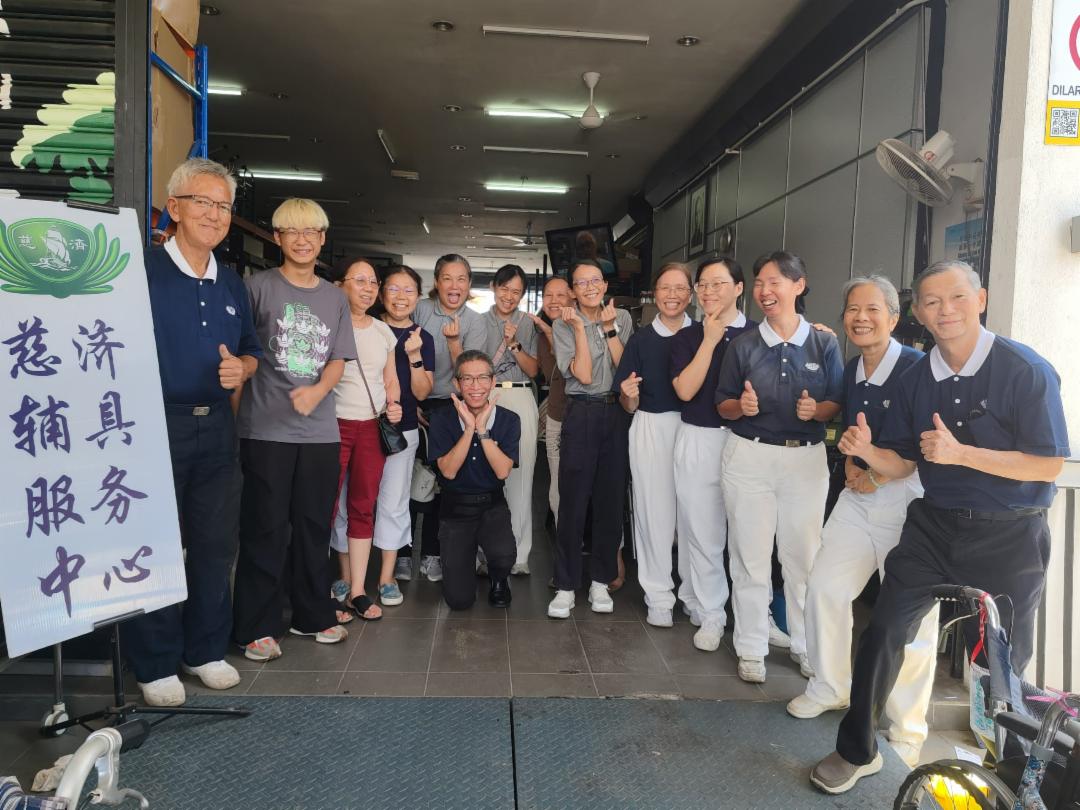






![The Tzu Chi International Medical Association (TIMA) volunteer team hosted a training session to strengthen home caregiving, covering basic nursing and assistive device functions. [Photo by Lee Kim Guat]](/images/Articles/YL/2026/YL_KL20260409_ljy08_030.jpg "The Tzu Chi International Medical Association (TIMA) volunteer team hosted a training session to strengthen home caregiving, covering basic nursing and assistive device functions. [Photo by Lee Kim Guat]")
On 9 April 2026, the Tzu Chi Assistive Device Service Centre in Jinjang, Kuala Lumpur, held a training session on basic nursing care and assistive equipment, drawing ten volunteers for in-person participation, while another six joined online. Together, they embarked on a practical and enriching learning journey.
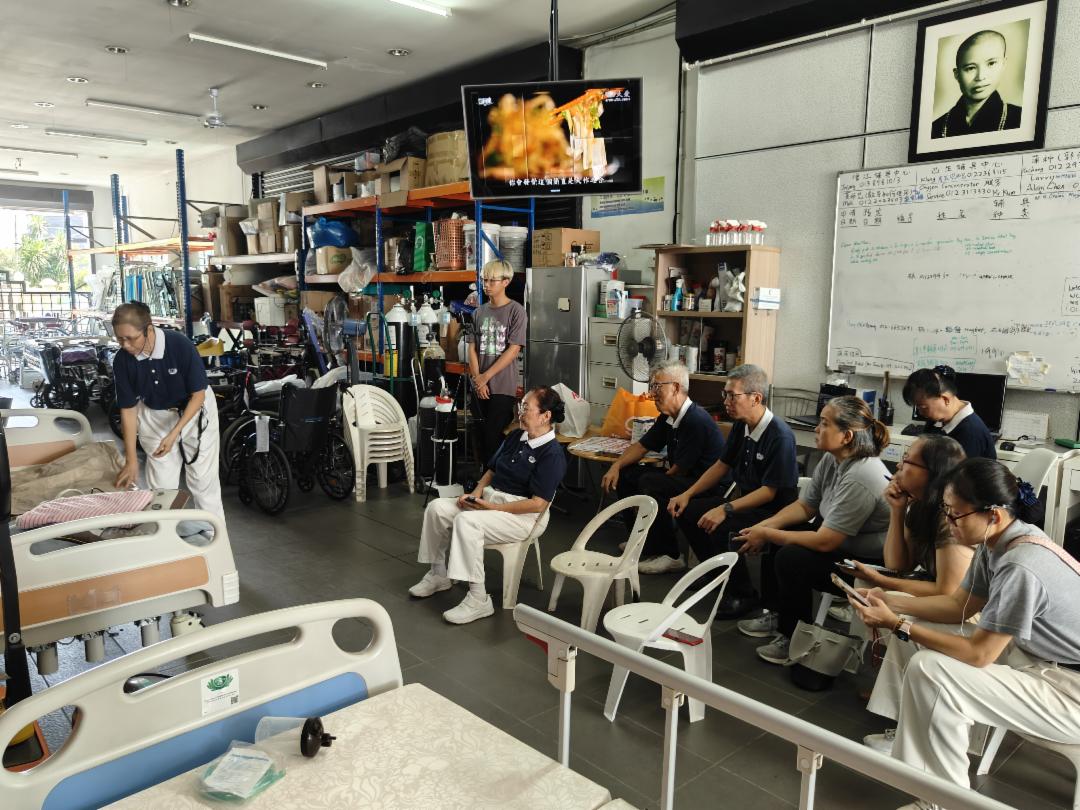
At the Tzu Chi Assistive Device Service Centre in Jinjang, a volunteer lay on a hospital bed, role-playing a patient, as participants gathered around, watching attentively.
Suddenly, the “patient” spoke up, “May I ask, where should I place my hands?”
Someone replied casually, “You are playing someone with paralysis of the lower body. You can put your hands wherever you like.”
The unexpected exchange broke the seriousness of the moment, and laughter rippled through the room.
The training session on basic nursing care and assistive equipment addressed everyday caregiving needs, from safely transferring patients and changing bed sheets for those who are bedridden, to the use, cleaning and maintenance of ripple mattresses and oxygen concentrators. Each essential skill was carefully broken down and explained step by step. Under the volunteers’ guidance, specialised knowledge was made accessible – something anyone could understand and apply in daily life.
◎ Not the lack of equipment, but knowledge
“I am a pharmacist, and also a volunteer,” said Yip Sook Ying, a member of the Tzu Chi International Medical Association (TIMA). She shared that she is often asked how to operate oxygen concentrators, ripple mattresses and other assistive devices correctly. She has also observed that many households, despite owning such equipment, are unsure how to use or clean it properly.
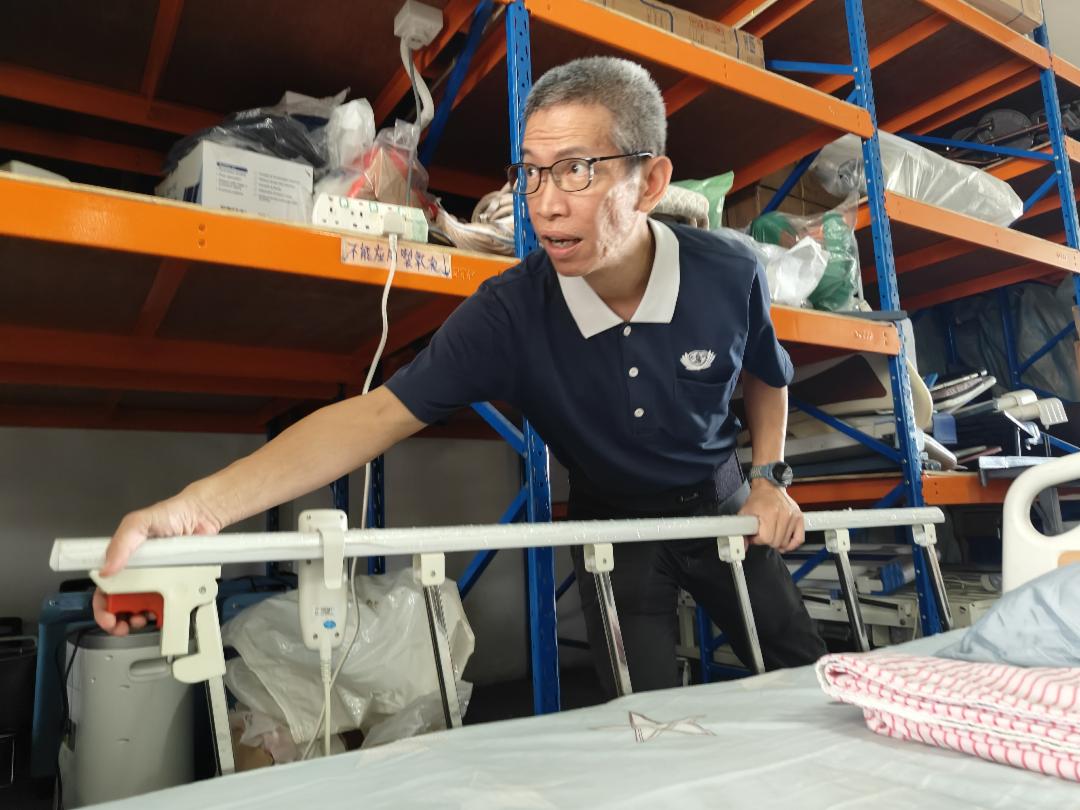
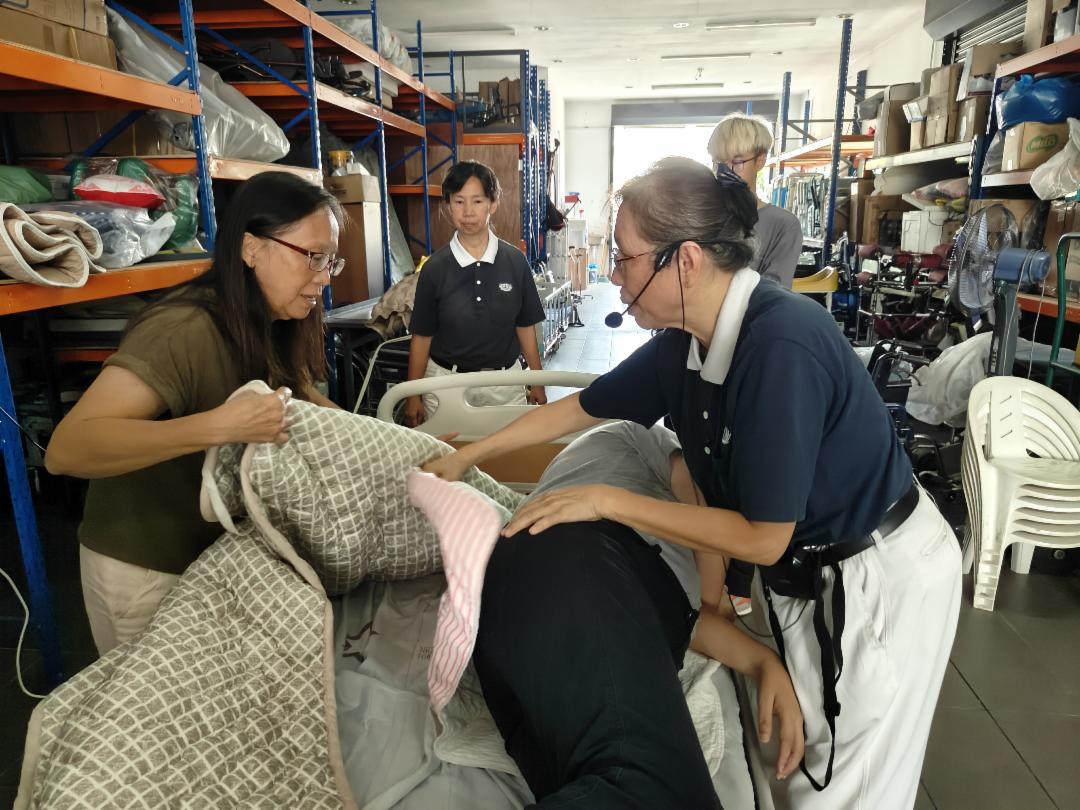
At the bedside, Sook Ying demonstrated how to help a bedridden person turn and reposition. Participants gathered around, watching each movement with focused attention, some exchanging quiet remarks, while a few attempted the techniques themselves. What may seem like simple actions can directly affect a patient’s safety and dignity, they also gauge the caregiver’s strength and attentiveness.
“We have been operating the assistive device service centre for a year and a half,” shared volunteer Wong Kang Jiann. He noted that when families come to apply for assistive equipment, their most common question is not about the equipment itself, but “How do we use it?”
Whether caring for someone with stroke, paralysis, or long-term immobility, families are often suddenly thrust into caregiving roles with no prior experience.
“More often than not, it is not the patient who caves in first; it is the family caregiver who becomes totally exhausted,” he said candidly.
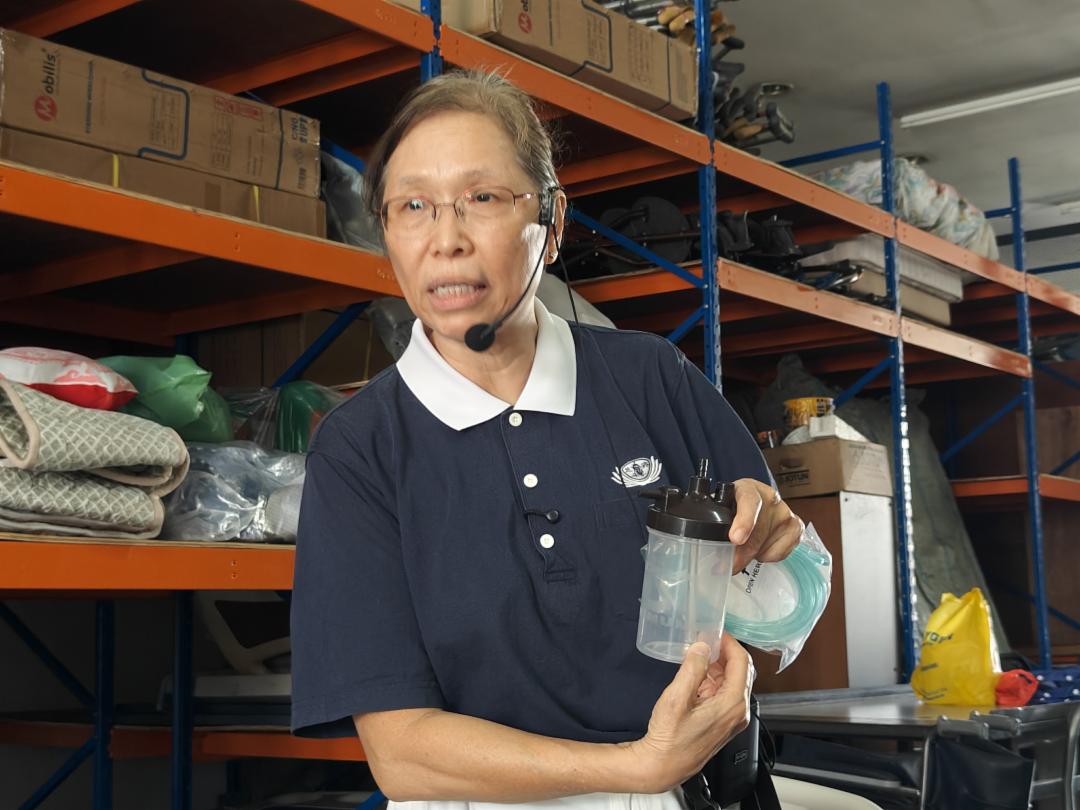
Kang Jiann added that many volunteers at the centre do not come from medical backgrounds. When faced with families’ questions, they often rely on personal experience. Training sessions like this aim to equip them with basic knowledge and the right understanding.
“Even if we are not medical professionals, we can at least point people in the right direction, so families know what to do and where to seek help,” he said.
◎ Caring from the patient’s perspective
During hands-on practice, Sook Ying repeatedly emphasised a key principle: “Protect yourself, and protect the patient too.”
Moving a patient from bed to wheelchair, assisting with turning, or changing bed sheets may look straightforward, yet each action carries hidden risks. Improper handling can strain the caregiver’s body, while unsteady movements may cause discomfort or even injury to frail patients.
Through repeated demonstrations and hands-on practice, participants gradually learned to use proper techniques to move patients, reducing physical strain on themselves while keeping patients comfortable and safe.
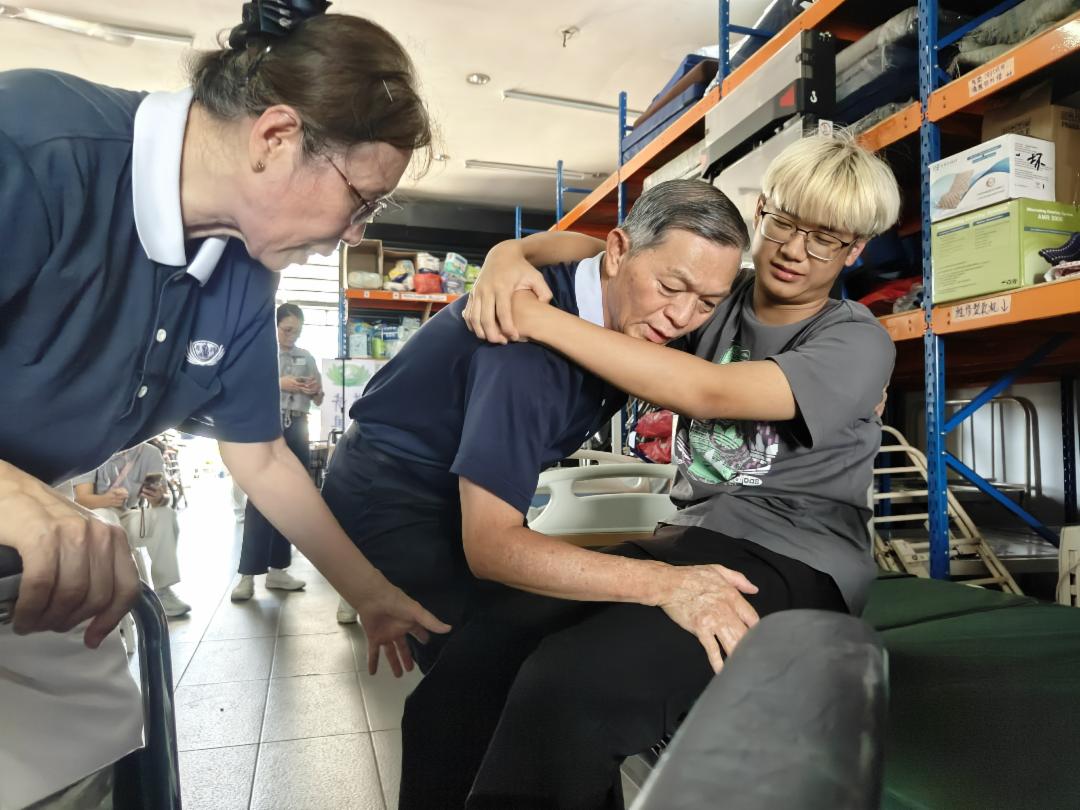
“You only realise how difficult it truly is when you experience it yourself,” said participant Chay Sie Wai, who lay on a hospital bed during the session and experienced being moved as a patient.
She admitted to feeling anxious when she was unable to move independently and had to rely entirely on others. “I wasn’t just worried about falling. I also worried that my caregivers might get hurt if they were not careful,” she said.
This experience gave her a new perspective on caregiving and a deeper appreciation of the effort it demands. Many family members have to take on caregiving responsibilities all of a sudden, learning as they go. At times, the physical and emotional strain can be overwhelming, and feelings of frustration and helplessness are almost inevitable.
“It is not that they are unwilling; it is simply too exhausting,” she said. What she once perceived as complaints, she now understands as the accumulated weight of long-term stress and fatigue.
“As long as we are willing to learn, and willing to share what we have learned, we can certainly help more people,” she added.
◎ Thorough care lies in thoughtful details
During the session, volunteers also highlighted the importance of skin care for those who are bedridden. Taking one of the most vulnerable areas—the buttocks—as an example, they explained that the skin should be gently patted dry after cleaning. When paired with a ripple mattress, pressure can be more evenly distributed, improving blood circulation and reducing discomfort caused by prolonged bed rest.
Participants were also reminded not to expose ripple mattresses to direct sunlight, as this may affect their support function. Fingernails should be kept short as well, as they may accidentally puncture the cushion during handling.
In the assistive equipment segment, volunteers explained the basic principles and proper use of oxygen concentrators, stressing that such devices must only be used following a doctor’s assessment. Adequate ventilation and keeping the equipment away from fire sources are essential for safety. Routine cleaning and maintenance are equally important, as only well-maintained equipment can function effectively.
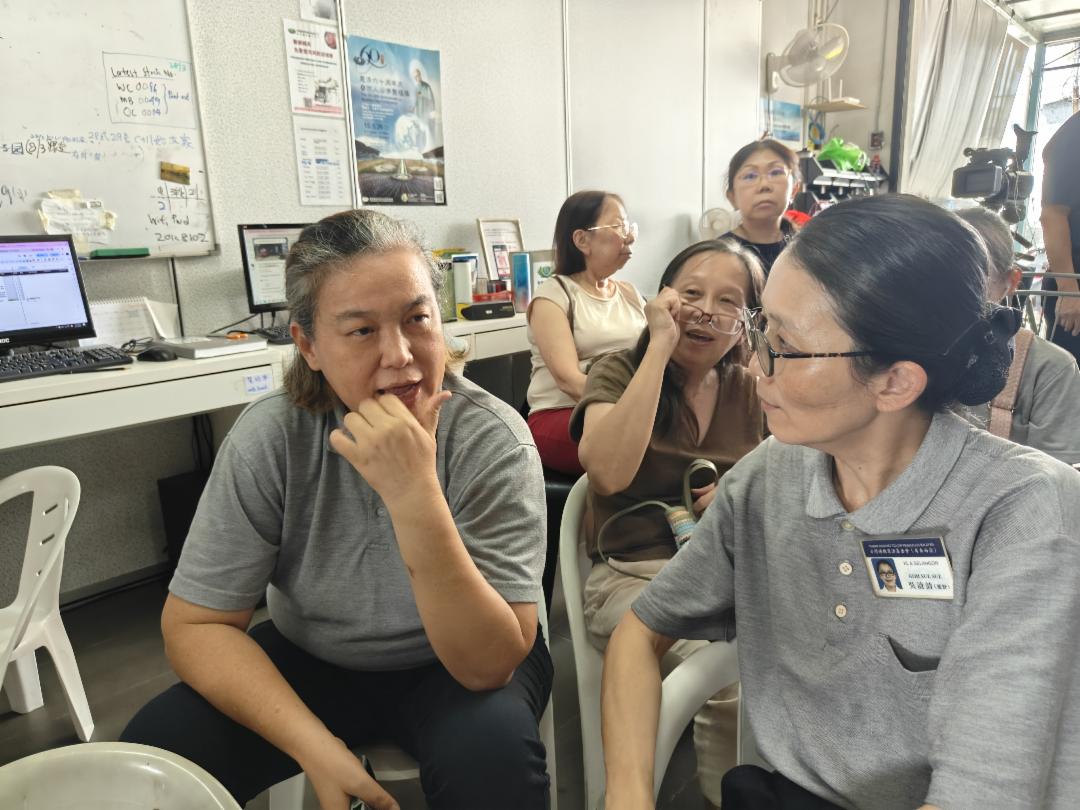
“These are things you don’t really learn until you have done it yourself,” shared volunteer Ling Chwen Ping. Although she had encountered related information before, it was only through hands-on practice that she fully grasped the importance of every detail.
She noted that her understanding of assistive devices had previously been limited. For instance, it was only during this session that she clearly learned about the internal structure of oxygen concentrators and the specifics of routine maintenance.
“I had absolutely no idea that some parts need to be replaced regularly. Now I know how to assess and handle that,” she said.
She also admitted that without regular practice, such skills can be easily forgotten. She therefore suggested holding similar sessions regularly, so volunteers can practise repeatedly and reinforce what they have learned.
“Once you have learned it, you can pass it on and help more people,” she said. For her, learning is not just for herself, but a way to support more families in need within the community.
●
More than a lesson in technical skills, this training session helped participants better understand the realities of caregiving and how to support others with empathy. With right knowledge and good training, challenges can become more manageable.