






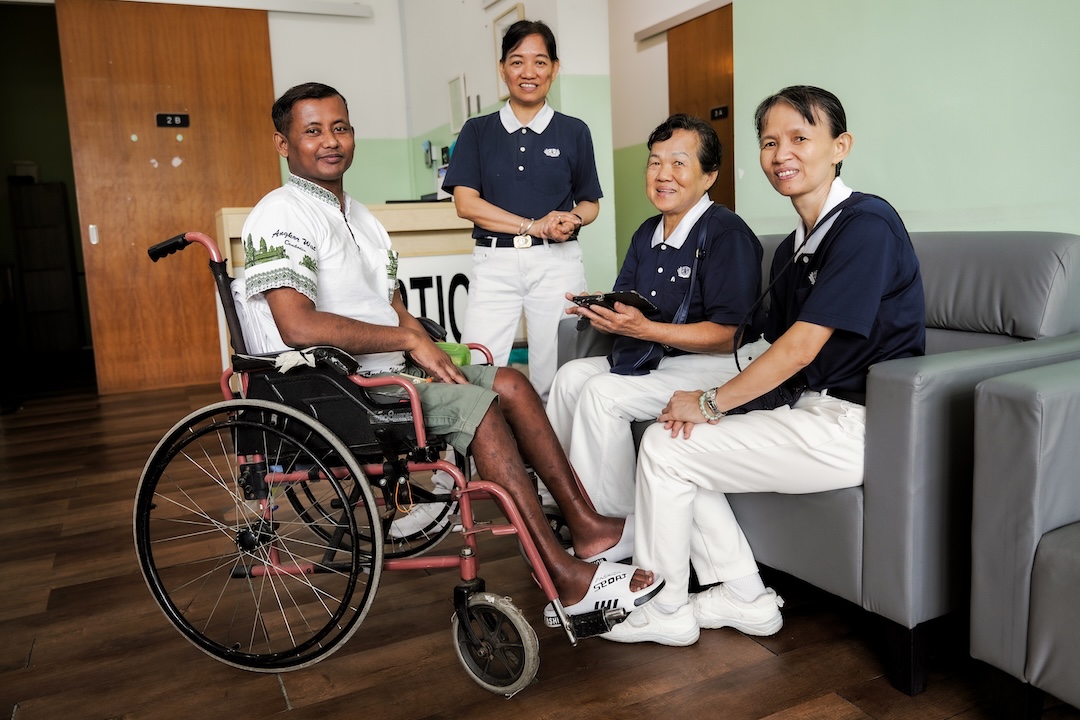
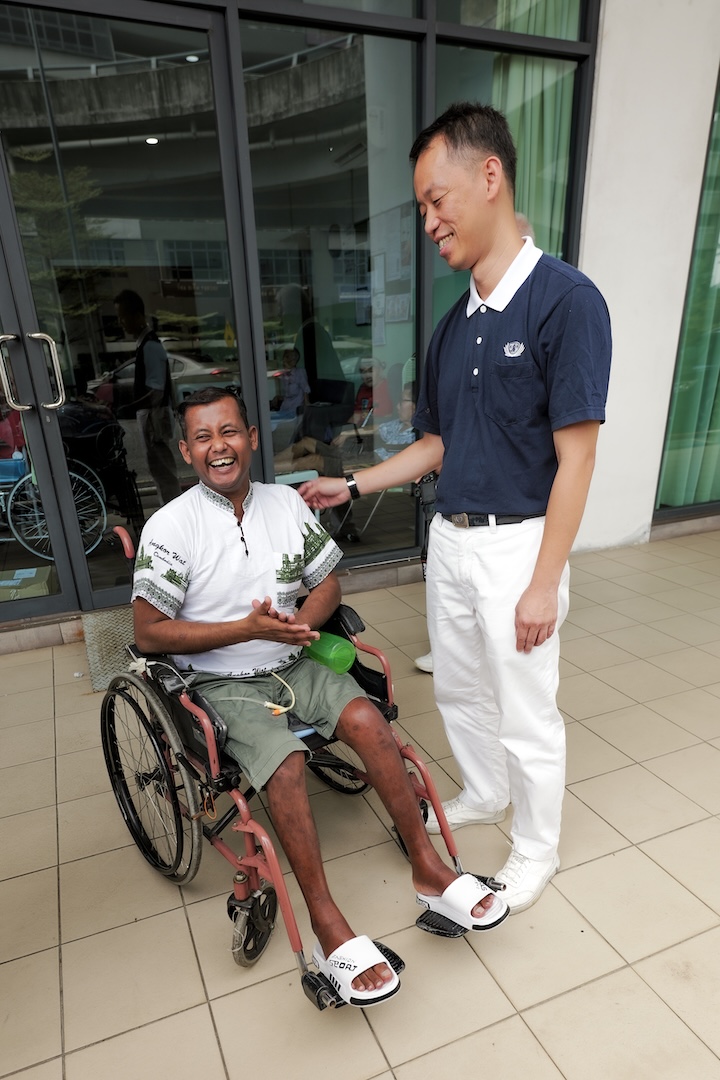
![Before leaving for resettlement, Aman Shah made one request: “I hope to see Tio Tit Siang.” He has not forgotten those who stood by him in his darkest days. To Tit Siang, it was a farewell marked by a sense of fulfilment. [Photo by Lim Joo Leang]](/images/Articles/CS/2026/KL20260412_lyl09_037.jpg "Before leaving for resettlement, Aman Shah made one request: “I hope to see Tio Tit Siang.” He has not forgotten those who stood by him in his darkest days. To Tit Siang, it was a farewell marked by a sense of fulfilment. [Photo by Lim Joo Leang]")
After a road accident left refugee Aman Shah paralysed, Tzu Chi stepped in to help. Years later, his application to resettle in Canada and reunite with his family was approved. Before leaving, his greatest wish was to see the volunteers who had supported him.
On the morning of 12 April 2026, sunlight streamed through the floor‑to‑ceiling glass doors of Mintygreen Senior Care Centre in Kajang, spilling across the room and onto a wheelchair.
Seated in his wheelchair, Aman Shah bin Abdul Malik lit up the moment he saw Tzu Chi volunteers walk in. The smile that spread across his face carried both anticipation and joy.
In just two days, he would be leaving this place, not for another transfer or medical review, but to travel to Canada and reunite with his family he had not seen for 14 years. Before setting off, he made just one request: “I hope to see him one more time.”
◎ Days of surviving in tears
Aman Shah is a Rohingya refugee from Myanmar. In 2014, at the age of 18, he had to leave his homeland, not by choice, but due to harsh circumstances. As conflict spread, villages were burned and people fled. His home, too, was reduced to ashes.
With nowhere to return to, he could only leave. He spent 18 days adrift at sea, travelling from Myanmar through Thailand before arriving in Malaysia. He was still so young then, driven simply by the will to survive, and by thoughts of his family, who remained in a refugee camp in Bangladesh.
“I came here just to make a living.” There was no plan, no vision of the future, only one goal: to stay alive.
He took on manual labour, hauling bottled water and doing physically demanding jobs for six years. Life was hard, but at least it was moving forward.
That changed in 2019.
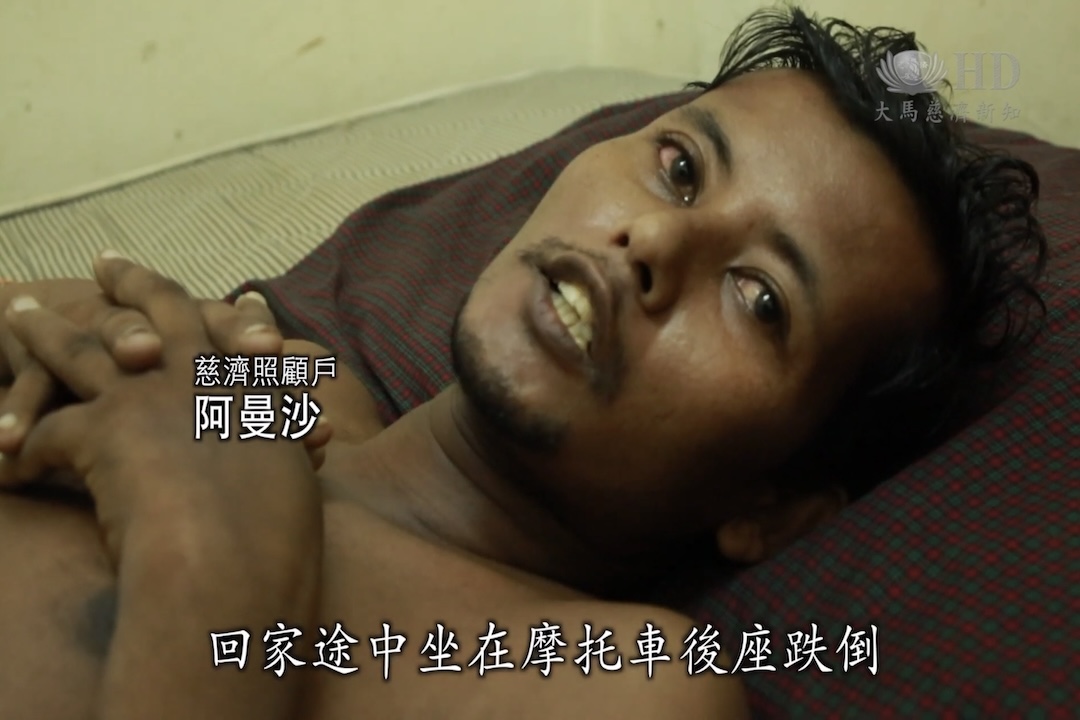
A road accident caused him to fall from the back of a motorcycle, injuring his twelfth thoracic vertebra and damaging his nerves. He was paralysed from the waist down. Doctors were clear: the injury was permanent. He would never stand again.
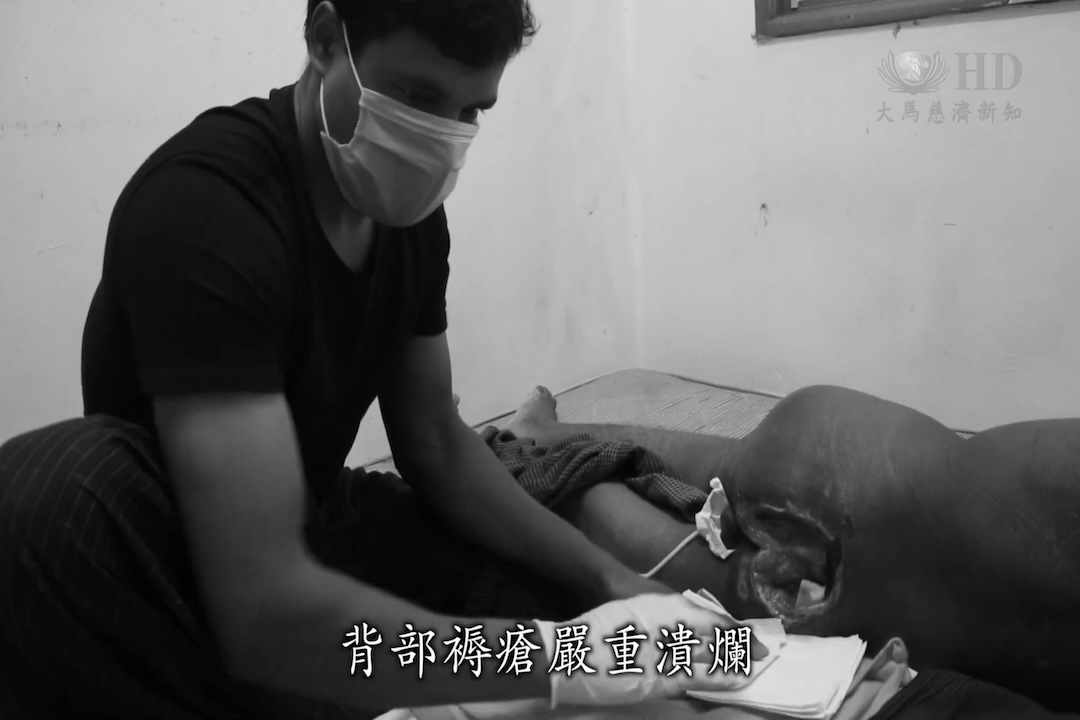
Prolonged bed rest led to a severe bedsore. The wound ulcerated, became infected, and grew so large it could fit two fists.
“The hardest part isn’t just about not being able to walk, but being unable to even manage basic bodily functions,” he said.
More than inconvenience, it was the feeling that his body no longer belonged to him. His life came to a painful halt.
In the early days after his injury, he did not receive proper medical care. He stayed temporarily with a friend, and his cousin, lacking medical knowledge, could only do his best to clean the wound. Without proper dressings or technique, the wound continued to deteriorate.
Pain, infection and helplessness became his constant companions. “I cried every day.” From a refugee camp in Bangladesh, his family could only cry with him over the phone. “They cried every day, and I cried every day too.”
He wanted to be with his family, but he could not.
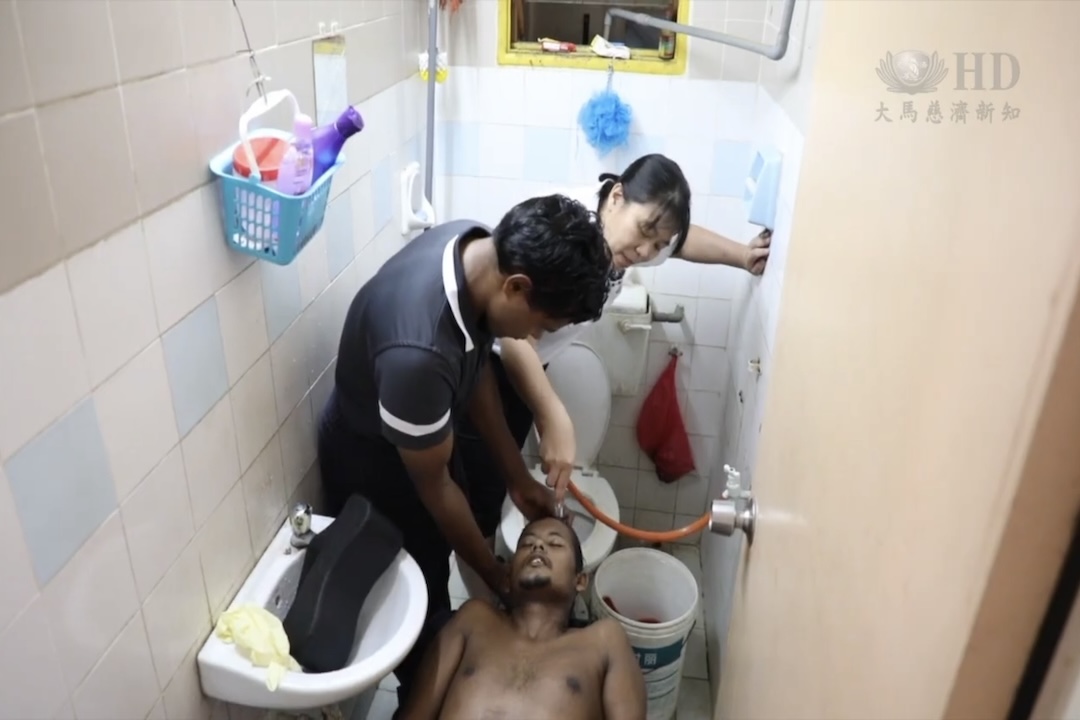
When Tzu Chi volunteers first met him, he had not bathed for seven months. Confined to bed and unable to care for himself, even basic hygiene had become impossible. The volunteers helped him wash — a long-overdue cleansing that restored, in some small way, his dignity.
◎ A way forward
In Malaysia, refugees like Aman Shah are not uncommon. They cannot work formally, struggle to afford medical care, and when illness or injury strikes, they often fall into even greater hardship.
Although the United Nations High Commissioner for Refugees (UNHCR) office in Malaysia issues refugee cards and provides pathways for third‑country resettlement, long waiting periods leave gaps, especially in daily living and healthcare. They have to rely on support from civil societies and volunteer organisations.
Tzu Chi KL & Selangor Chapter has long been committed to refugee care, providing living assistance, medical referrals and emotional support. Working alongside the Tzu Chi International Medical Association (TIMA), it helps vulnerable refugees access basic healthcare.
Aman Shah was one of those caught in the gap between what the system could offer and what survival demanded.
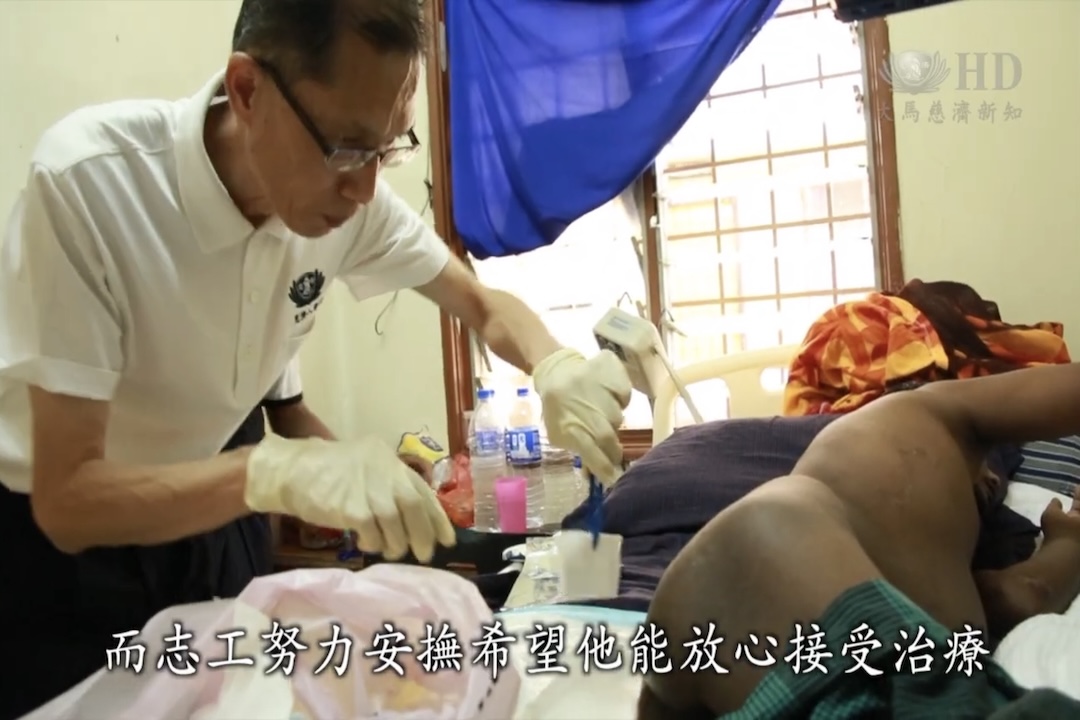
Volunteer from the Charity Team, Tio Tit Siang, recalled that in the beginning, the focus was simple: to help him survive and stabilise his condition. His bedsores needed treatment, infection control was urgent, and he required support with daily living. At that time, he could barely move, let alone think about the future.
“At first, we were focused on wound recovery and basic stability,” Tit Siang said. “We could only move forward one small step at a time.”
As the wound gradually healed and Aman Shah was able to sit in a wheelchair, Tit Siang began to ponder: “He is still so young. What might his future look like?”
There was no clear answer.
“Third‑country resettlement was not our initial direction,” Tit Siang admitted. At the time, Aman Shah hoped to go to Bangladesh, where his family was. But with his limited mobility, cross-border risks and the fact that he was alone made family reunion a path filled with immeasurable obstacles.
“At one point, we were stuck too,” Tit Siang said. “We did not know how else we could help.”
Through ongoing communication with UNHCR, another possibility gradually emerged. To truly help Aman Shah, the key was not only his medical care or placement, but helping his family secure resettlement in a third country.
With this in mind, Tit Siang began compiling documents for the entire family, submitting applications and tracking their progress. It was a long and complex process.
Step by step, a path that could not yet be seen, was carved, and a road towards reunion slowly took shape.
In 2023, the news finally arrived: Aman Shah’s family had been approved for resettlement in Canada.
In 2025, they departed in stages. Aman Shah himself was scheduled to leave on 14 April 2026. A door that had never existed in his life was finally opened.
Before leaving, he made one request: “I hope to see Tio Tit Siang.”
It was not a sudden thought, but a memory rooted in his hardest days. “If it weren’t for them, I would not be here today.” Among all the volunteers, this was the name he remembered most. “I must see him.”
◎ The one person he wished to see
On 12 April 2026, Aman Shah got his wish.
He washed and dressed early, sitting upright in his wheelchair, waiting quietly. When Tit Siang entered the centre, their eyes met and their hands clasped.
No words were needed. Everything was already written in Aman Shah’s radiant smile.
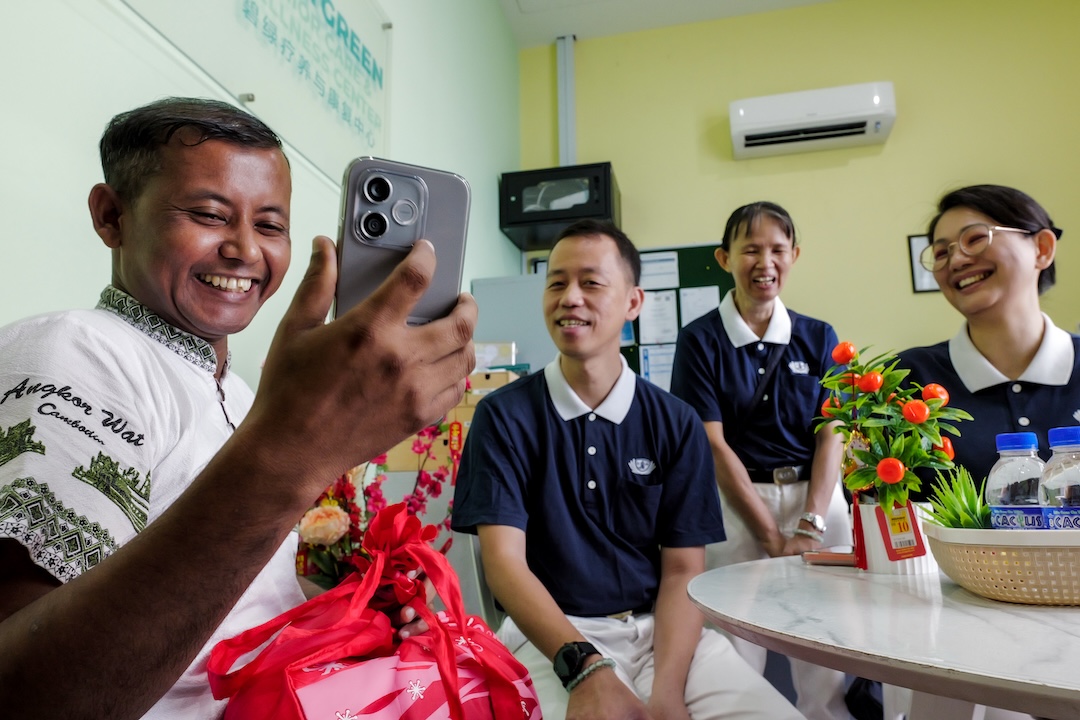
He then video-called his family in Canada. On one screen were loved ones he had not seen for years; beside him stood those who had walked with him through his darkest days. His smile never faded.
For Tit Siang, seeing Aman Shah successfully resettled brought a deep sense of relief.
“I am truly happy to have been able to help him,” he said. Then he added, “He keeps thanking us, but in truth, I am even more grateful to him — he taught me how to help others.” Through this journey, he learned how to navigate the space between systems and human needs.
Tit Siang admitted there was a period when he did not visit and felt a sense of guilt about it. When he learned that Aman Shah still remembered him and wanted to meet, he said simply, “I want to see him too.”
“This is one of the cases that left the deepest impression on me,” he said. “At last, he can begin a new life.”
◎ A farewell made whole
Over six years at the centre, another name surfaced repeatedly — Yong Sai Yeng.
“She has cared for me for six or seven years,” Aman Shah said. Toothpaste, medication, daily necessities… with just a word, she would always bring what he needed.
“I just tell her, and she gives it to me. I call her ‘Mama’.”
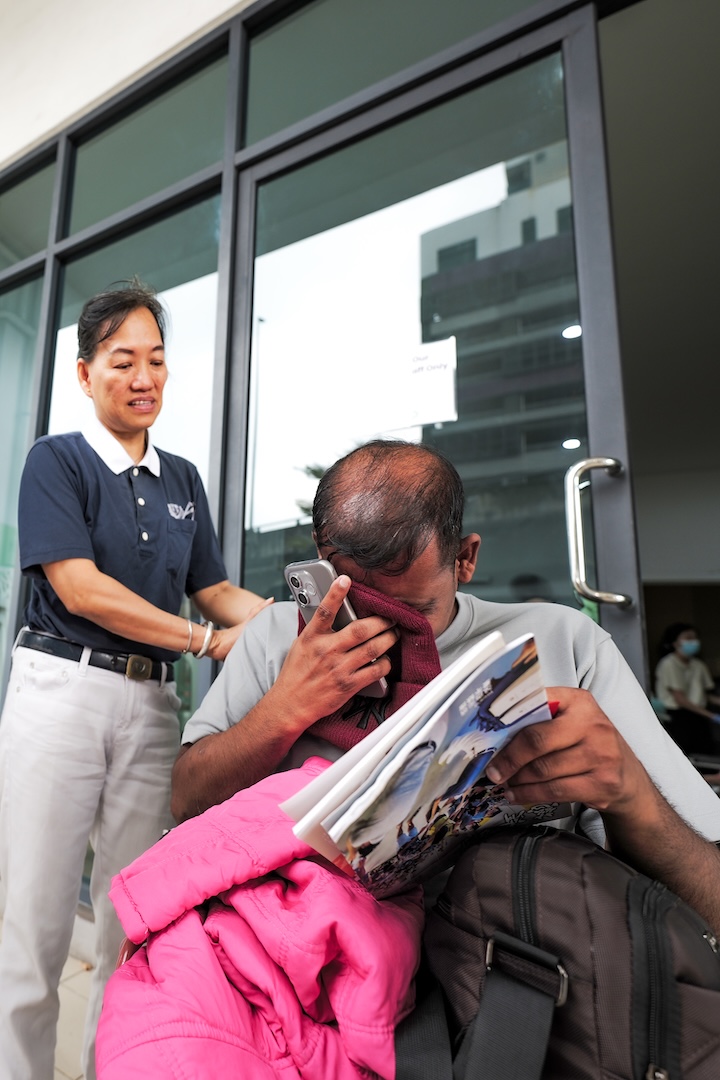
That single word brought tears to Sai Yeng’s eyes. Aman Shah, too, covered his face as he wept.
For Sai Yeng, seeing him off was both a farewell and a moment of completion. “I am so happy he can go and see his family,” she said. For her, these past years had been like raising a child. Now, he was going home, to a place no amount of care or companionship could replace.
She recalled that when she first met Aman Shah, he was short‑tempered and rarely spoke. “Now he is gentler. He chats with us,” she said. Today, his smile was especially bright.
That change had not happened overnight. It had been shaped slowly by time, kindness and companionship.
“When the unfortunate cannot find help, those who are blessed must go to them. If it is the right thing to do, then just do it,” Sai Yeng said, holding firmly to Master Cheng Yen’s teachings.
●
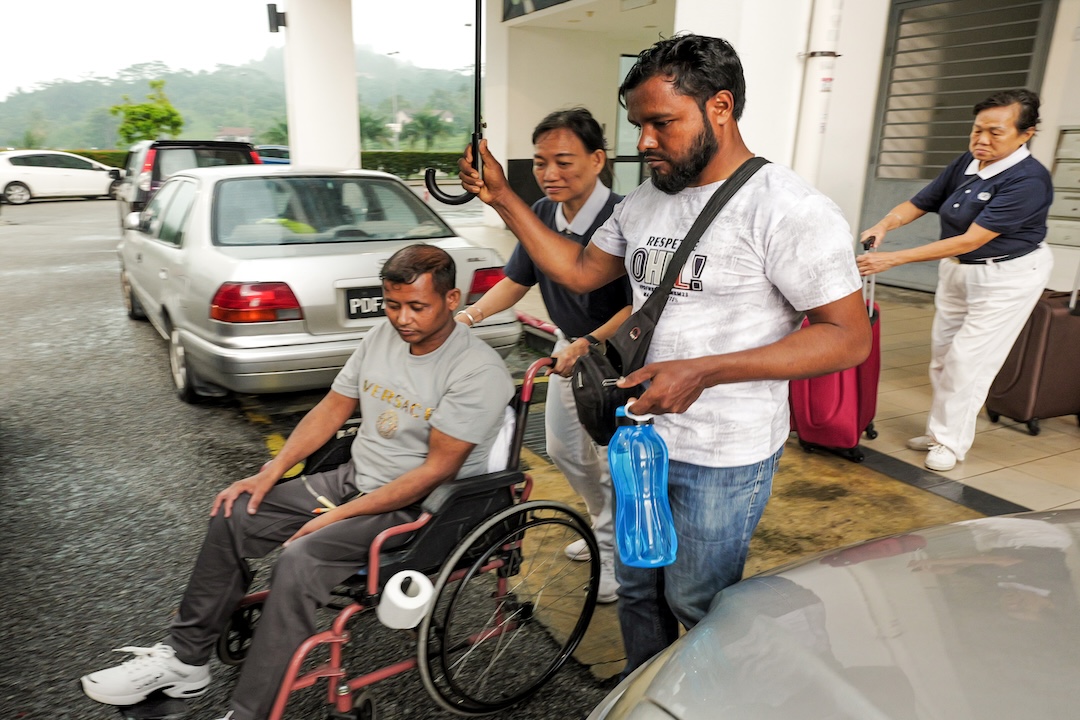
On 14 April, volunteers returned to the centre to see Aman Shah off. Outside, a sudden downpour began. The wheelchair rolled slowly towards the exit. As he was helped into the car, the rain softened into a fine drizzle, as if making space for the farewell.
He was leaving for a faraway place. Yet he had not forgotten who stood by his side and walked with him when he could barely move.
For the volunteers, this moment was a poignant moment — a parting and a fulfilment.
Aman Shah did not linger. He simply gave a gentle nod.
The centre’s doors closed. Another door in his life was opening.


