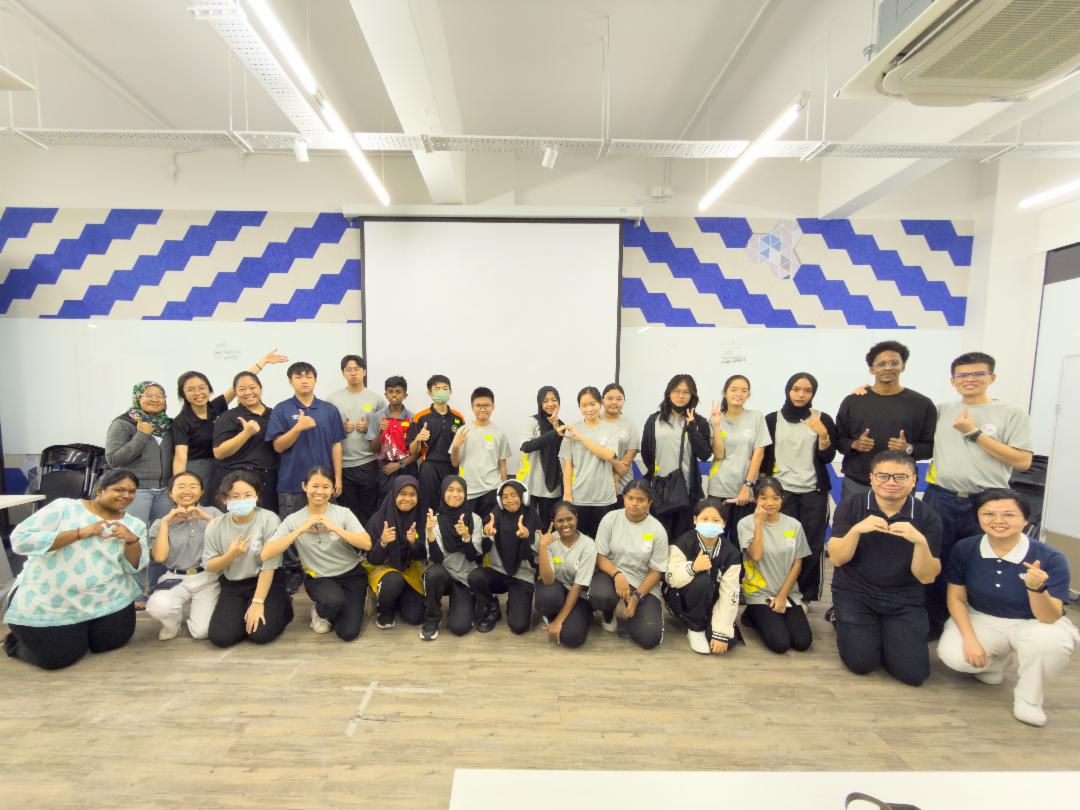






![Led by Chumbaka and co-organised by Tzu Chi IYLP and i∙didik, the free Arduino robotics workshop kicked off with great energy. In just three hours, children not only lit up LEDs and programmed sounds and melodies, but also planted seeds of curiosity, teamwork, and perseverance. [Photo by Yap En Han]](/images/Articles/CS/2025/KL20250921_yeh01_066.jpg "Led by Chumbaka and co-organised by Tzu Chi IYLP and i∙didik, the free Arduino robotics workshop kicked off with great energy. In just three hours, children not only lit up LEDs and programmed sounds and melodies, but also planted seeds of curiosity, teamwork, and perseverance. [Photo by Yap En Han]")
In Malaysia, the push for STEM education is more than a policy. It is a pathway to future opportunities. Yet, despite a national target of 60% STEM enrolment, the rate remains below expectations, especially among children from lower-income households. Against this backdrop, Tzu Chi’s i∙didik programme joined forces with the Tzu Chi IYLP and social enterprise Chumbaka to take STEM learning beyond classrooms, turning curiosity into confidence through hands-on experience.
Malaysia’s Education Blueprint (2013–2025) sets a target of a 60:40 Science to Arts ratio at the upper secondary level. However, as of 2024, the national STEM (Science, Technology, Engineering, Mathematics) enrolment rate stands at only 50.83%, still some distance from the goal. This gap is especially evident among B40 households, where families often face limited access to technological resources and have fewer opportunities for early STEM exposure. As a result, children may lack confidence in this field.
In response, Tzu Chi’s “i∙didik” programme stepped beyond the school setting for the first time in 2025, collaborating with the Tzu Chi International Youth Leadership Programme (IYLP) and Chumbaka, a social enterprise that develops children’s life skills through technology, to reach students from underprivileged backgrounds. Through hands-on experiences, the initiative aimed to help students find an entry point into understanding technology, build confidence, and see the possibility of choosing the science stream before they face subject-streaming decisions in Form 4.
The “STEM Activiti (i∙didik x IYLP 2025)” workshop was conceived from this mission—transforming abstract STEM concepts into tangible learning experiences through an Arduino robotics workshop. With this sense of anticipation, students arrived early on the event day, ready to embark on a brand-new journey of exploration.
As morning sunlight streamed through the windows, children gathered around long tables, sharing snacks and drinks. Laughter and excitement filled the room. On September 21, 2025, a free Arduino robotics workshop, led by Chumbaka and co-organised by Tzu Chi IYLP and Tzu Chi i∙didik, was held at Jumpstart 65 community and co-working hub. In just five hours, students not only learned to light up LEDs and program sounds and melodies, but also planted seeds of curiosity, collaboration, and perseverance in their hearts.
The session began with simple ice-breaking activities to help students connect. One teacher asked, “If you could only choose one, would you go on TikTok or Instagram?” Students excitedly raised their hands, formed two teams, and were later divided into smaller groups (numbered 1 to 10). Many groups were ethnically diverse—Chinese, Malay, and Indian students working side by side—creating a warm, multicultural learning environment. While some groups faced challenges such as language barriers or a shortage of tablets, teachers and peers patiently supported one another, maintaining a positive and encouraging atmosphere throughout.
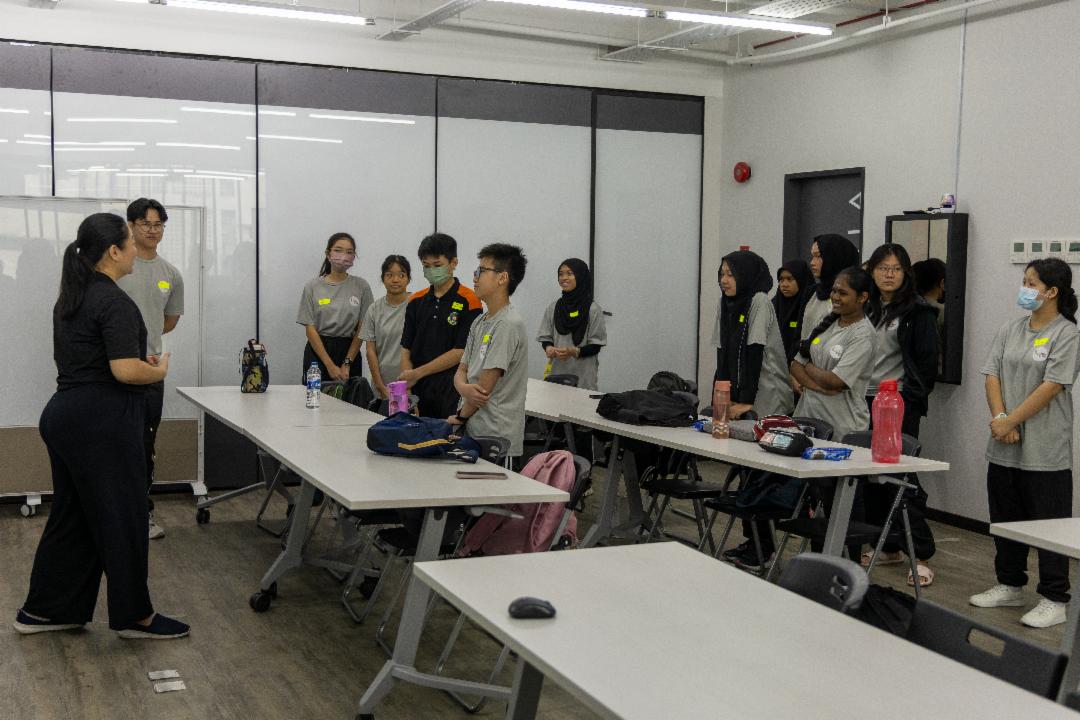
◎ From wiring to coding: Turning imagination into reality
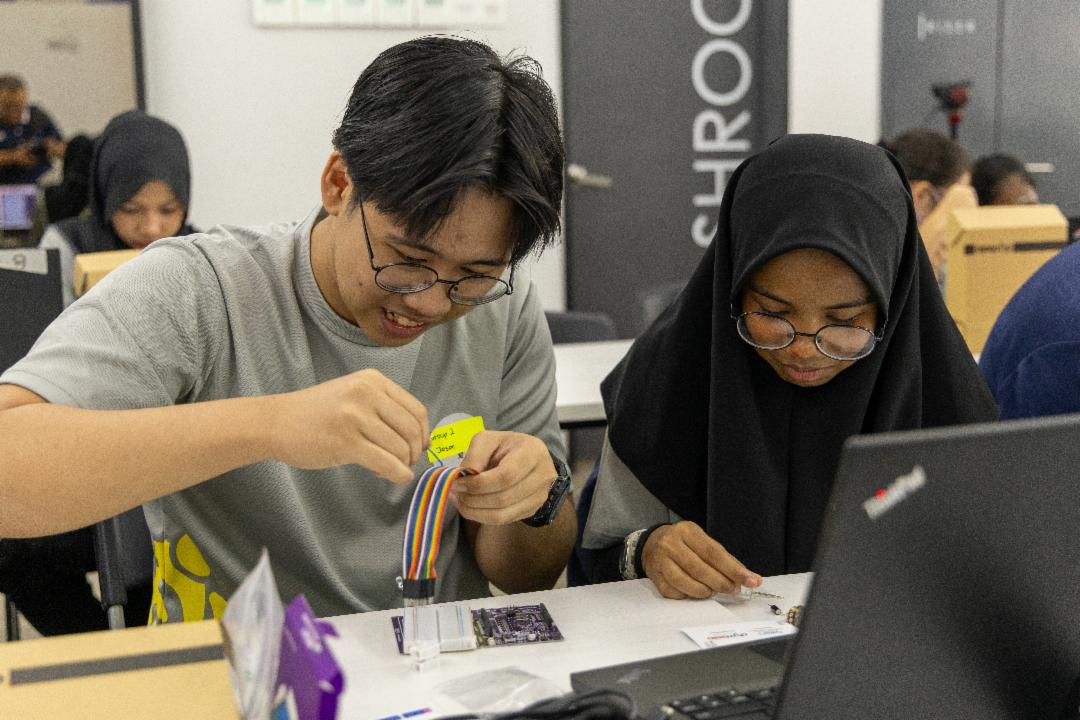
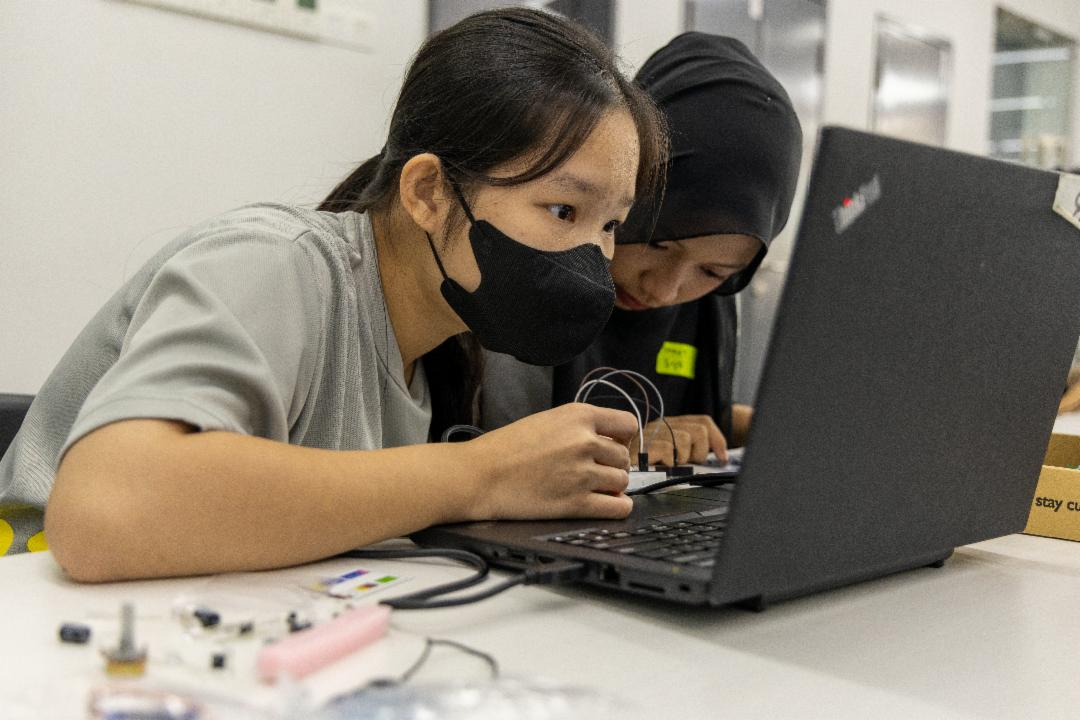
Each group received an Arduino kit, including a circuit board, wires, LEDs, and speakers. Under the guidance of instructors, students accessed the website on their tablets to download programs or watch tutorial videos. They learned how to upload code and make LEDs blink.
Students first connected the tablet to the circuit board using a cable, then followed video examples to attach LEDs to the correct pins and write HIGH/LOW commands in the code to control blinking speed. Later, they connected speakers to their devices to produce sound.
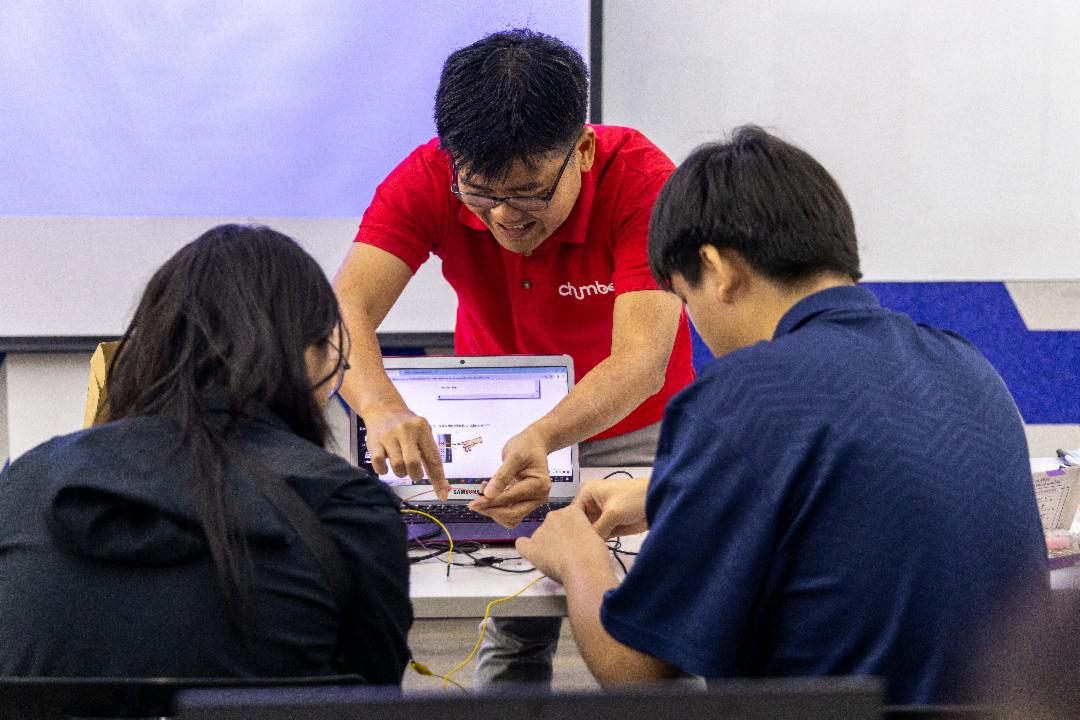
Some groups picked things up quickly, while others struggled with wiring or matching resistors and LEDs. Whenever the lights failed to turn on as expected, trainers and peers encouraged students to keep trying. Some students raised questions to the instructors, while others sought help from teams that had already succeeded. Scenes of teamwork were common—groups that succeeded willingly demonstrated and explained their methods to others, creating a continuous cycle of teaching and learning.

◎ Inspiring scientific thinking through everyday questions
Beyond technical demonstrations, Dr. Chew Yen Seng, CEO of Chumbaka, guided students to think scientifically about everyday life. He asked questions such as, “Why don’t dry leaves make a sound, but green leaves can trigger sound from the machine?” Through this, students discovered that water conducts electricity, linking physics concepts to hands-on experimentation.
Dr. Chew also reminded participants that while a few hours of exposure can spark excitement, long-term impact requires follow-up and systematic planning. He shared, “We are a social enterprise focused on STEM education. Our role is to create as many opportunities as possible for students to engage with technology, regardless of whether they come from privileged or underprivileged backgrounds.” He further suggested that i∙didik could consider organising visits to technology companies, allowing students to see real-world industry platforms for greater inspiration.
◎ From ‘I can do it’ to ‘I want to learn more’
During the project presentation session, students took turns sharing their group’s work and learning process. Form 2 student Tan Yi Lin, a first-time STEM participant, and her teammate, Nursyahara Aida, divided their roles clearly—Yi Lin handled the coding, while Aida managed installation and wiring. Step by step, they lit up the LED and enabled sound output. When the light did not work as expected, they sought help from trainers, discussed solutions, and revised their work. Eventually, they confidently presented their project on stage, earning applause.
Yi Lin shared that this experience strengthened her determination to pursue the science stream, as she enjoys nature and animals. Aida expressed interest in joining similar programmes in the future and applying the teamwork skills she learned back in school.
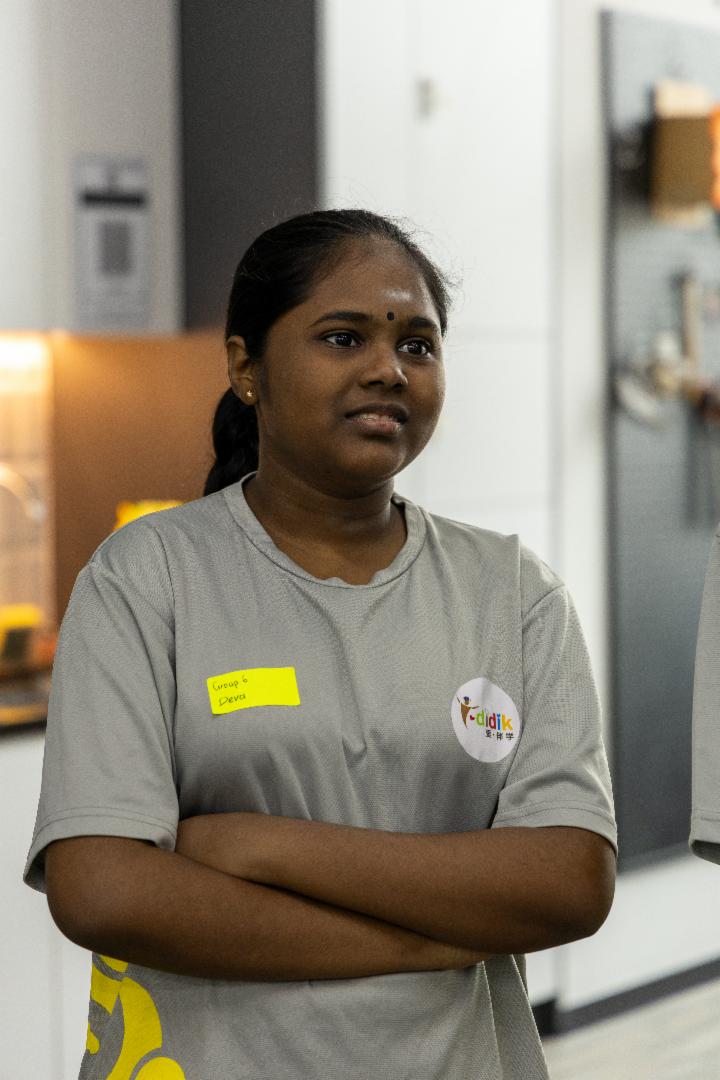
Another Form 2 student, Devadarshini, also experienced robotics for the first time. Although she missed the online briefing, she registered immediately after being selected and prepared actively. Her favourite part was working with teammates to light up LEDs and produce sound. She learned to use a laptop, overcame wiring mistakes, and confidently presented her ideas during group discussions on the Sustainable Development Goals (SDGs).
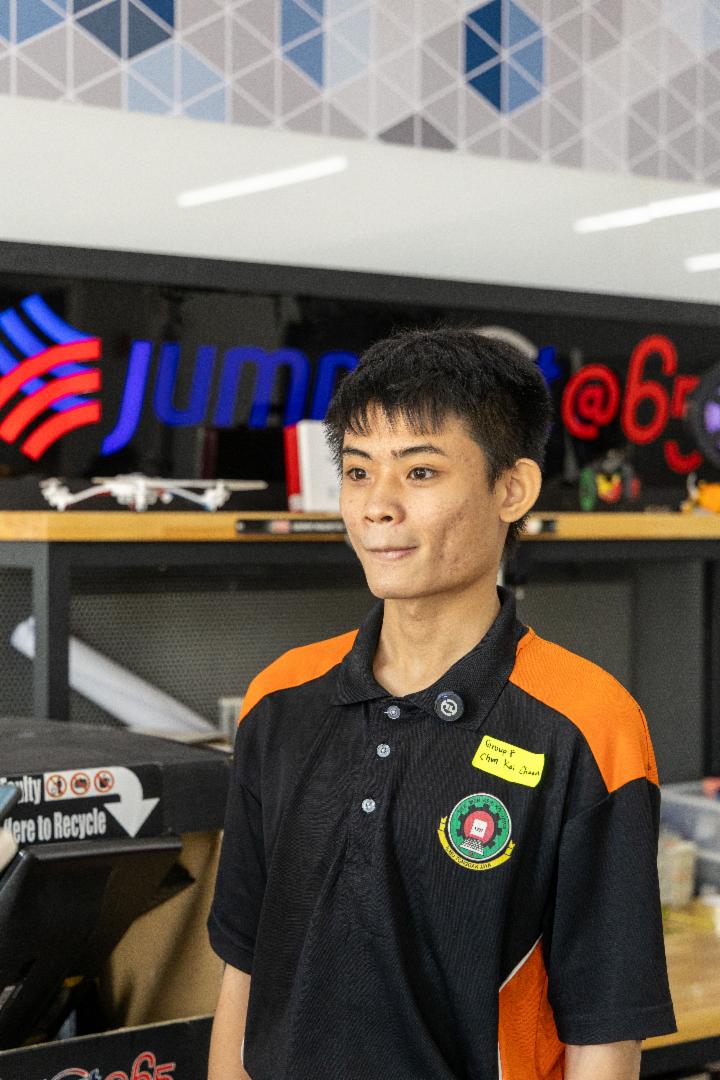
Student Chung Kai Chuan described a strong sense of achievement when he successfully lit up his first LED. He later experimented with controlling light rhythm and speed, gradually turning ideas into reality with the teacher’s support. The process felt like “playing while learning,” sparking his interest in further exploring IT and programming.
◎ A moving journey of support
Among many heartwarming moments, Teacher Lee Pao Yeen shared a particularly touching story. A mother, who uses a wheelchair and lives in a remote area, spent over RM30 on a Grab ride to bring her daughter, Karshini, to the workshop. Along the way, drivers struggled to find the location, and some refused the trip due to the wheelchair. Despite arriving late, the mother persevered and ensured her daughter could participate.
Teacher Lee said this dedication was deeply moving and reinforced her belief in the importance of the workshop for both children and families. She also expressed gratitude to IYLP members and added, “We are truly thankful to Dr. Chew. When he heard our needs, he agreed immediately and simply asked, ‘How many students?’ This kind of support means a lot to us.”
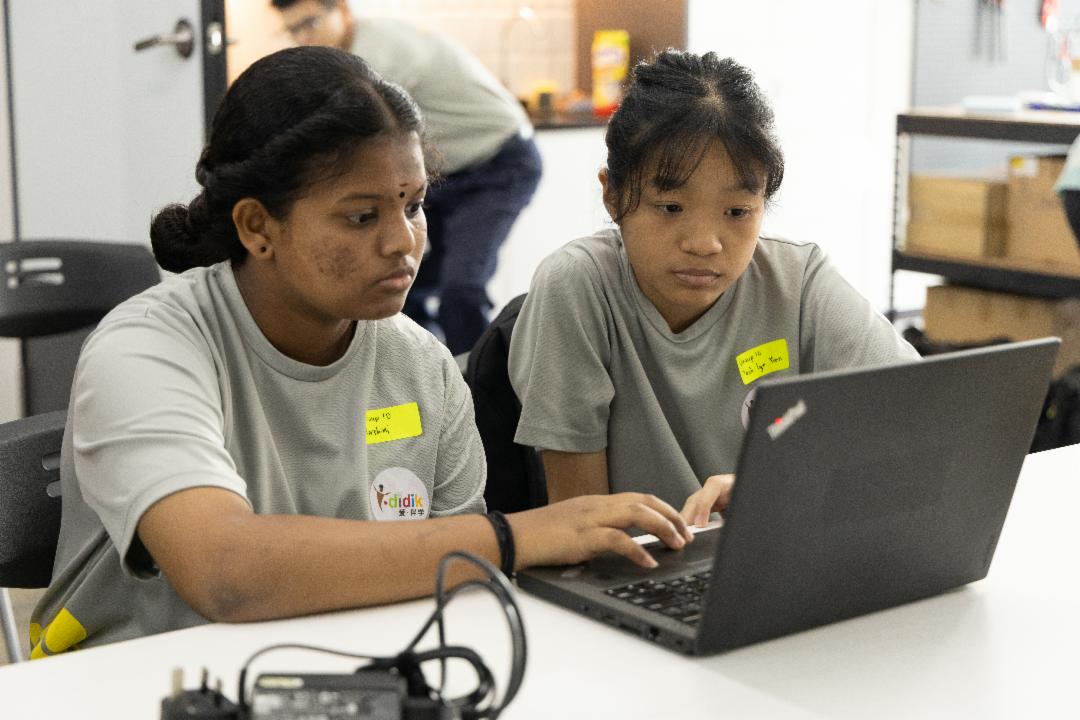
She emphasised that while technical skills are important, cultivating determination and problem-solving abilities is even more critical. Coding itself is a process of repeated trials and errors, and this resilience is an irreplaceable life skill. She observed that pairing students helped develop collaboration and task division, though it also presented communication challenges. She hopes that with access to personal laptops in the future, students can continue practising and deepening their learning after class.
◎ Sustaining meaningful STEM experiences
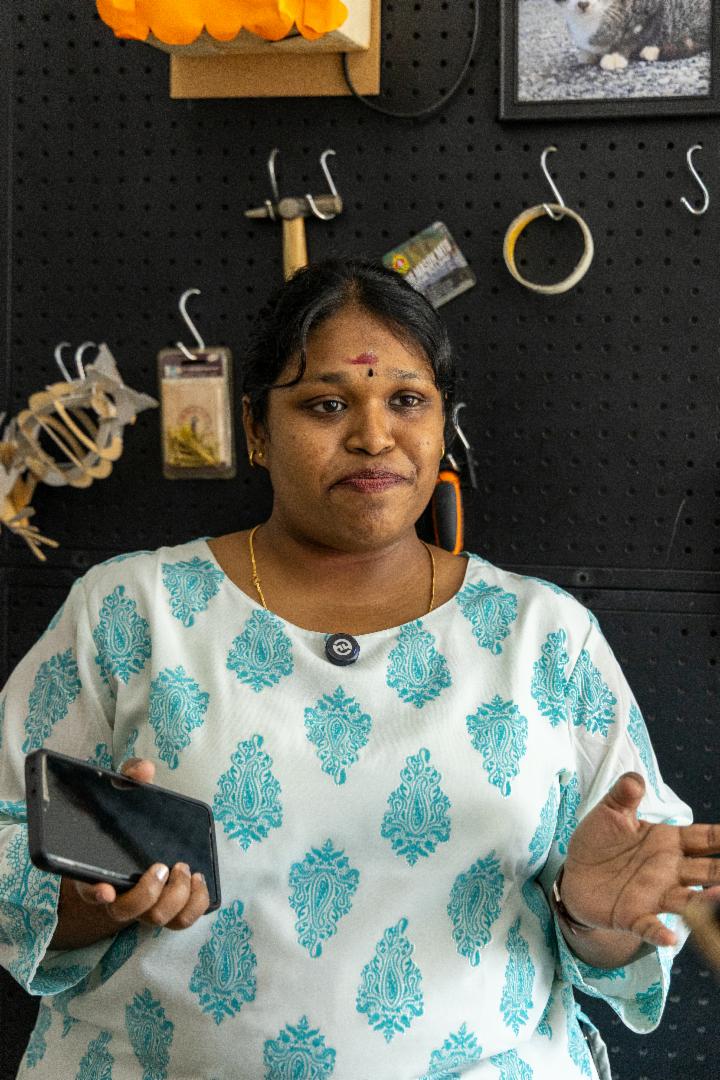
Representing the IYLP, Kearthika bridged STEM and the SDGs by integrating actionable ideas into the workshop design. During the session, she guided students to explore how Arduino robotics could contribute to solutions for SDG 11: Sustainable Cities and Communities, making global goals relatable.
Reflecting on the preparation process, Kearthika acknowledged that resource constraints initially posed challenges, but timely collaboration from the Chumbaka team turned the vision into reality. She encouraged students and the team with a simple yet powerful message: “The spirit of learning means never giving up. Even when you face setbacks, persevere. And remember, teamwork truly matters.” She also expressed gratitude to parents who, despite financial limitations, fully supported their children’s participation.
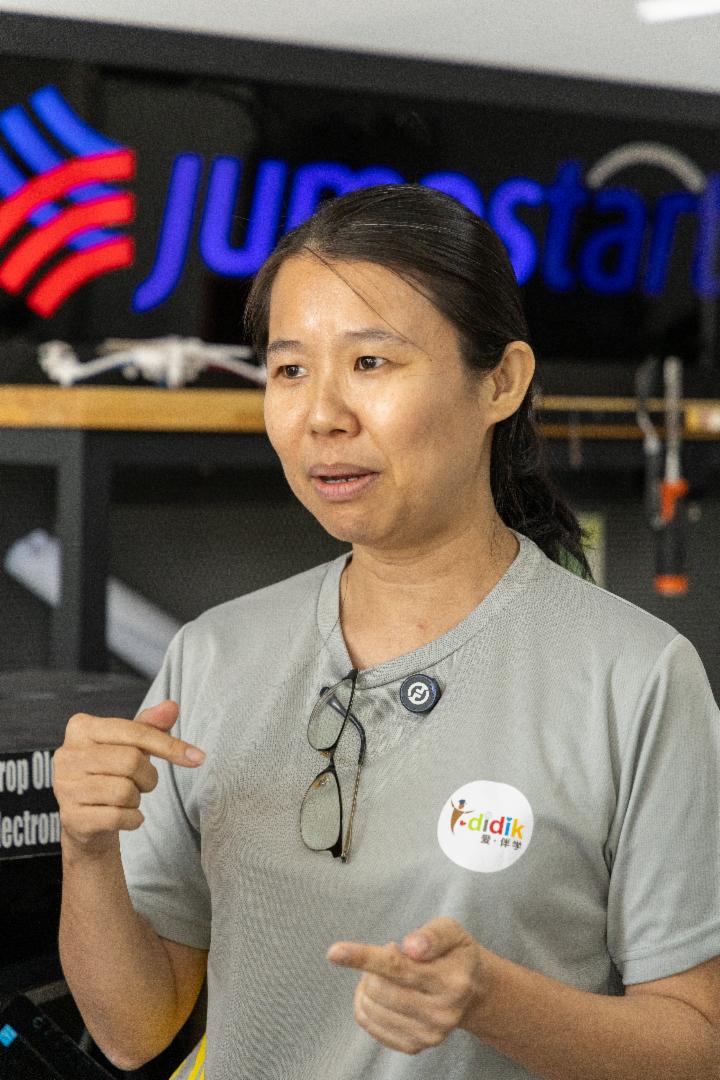
Dr. Chew reflected on his long-standing connection with Tzu Chi, recalling a project from a decade ago where he worked with architects to design recyclable temporary shelters that could be assembled within five minutes. “That was when my journey with Tzu Chi began,” he shared, praising the dedication of volunteers and teachers. He added, “While we talk about high technology, many children still need basic literacy and numeracy skills. Your commitment is truly admirable.”

◎ When passion continues, impact follows
As lunch arrived and students tidied the venue, they quietly completed feedback surveys with questions such as “What surprised you most?” and “Which part interested you the most?” Teachers encouraged them to stay true to their original aspirations and continue trying new things. During SDG group discussions, students worked seriously, debated enthusiastically, and confidently shared conclusions with the audience, earning applause and affirmation.
At the closing, everyone shouted together: “IYLP! i∙didik! Chumbaka!” The smiles were genuine, and the applause heartfelt.
Pre- and post-workshop surveys showed significant growth within just three hours. Before the workshop, 65% of students had no prior experience, while 80% were curious about technology and believed they could learn new skills. After the session, 75% successfully assembled or programmed a project, 92% reported a better understanding of electronic principles, and 100% learned basic mobile application development concepts. Notably, 90% expressed interest in participating in longer-term STEM programmes, demonstrating increased confidence and motivation.
Dr. Chew repeatedly emphasised that while technology evolves daily, what matters most is whether students can learn independently, collaborate, and explore. With self-learning skills, technological change will never become a barrier. As he noted, “Long-term impact is far more meaningful than a one-time experience.” Turning short-lived excitement into lasting opportunity requires systematic follow-up, industry visits, and continuous learning programmes. Only then will the light ignite at Jumpstart 65 illuminate not just LEDs, but a pathway towards the future.
●
Heartfelt thanks go to the Chumbaka team, IYLP members, i∙didik coordinating teachers, and all volunteers for their dedication, as well as to every parent for their trust and support. Every small step taken today—from wiring and debugging to presenting on stage—marks a milestone in each child’s learning journey.
May this passion extend beyond a single day and become the beginning of sustained attention and resource investment, giving more children the opportunity to discover themselves and broaden their horizons in the world of technology.