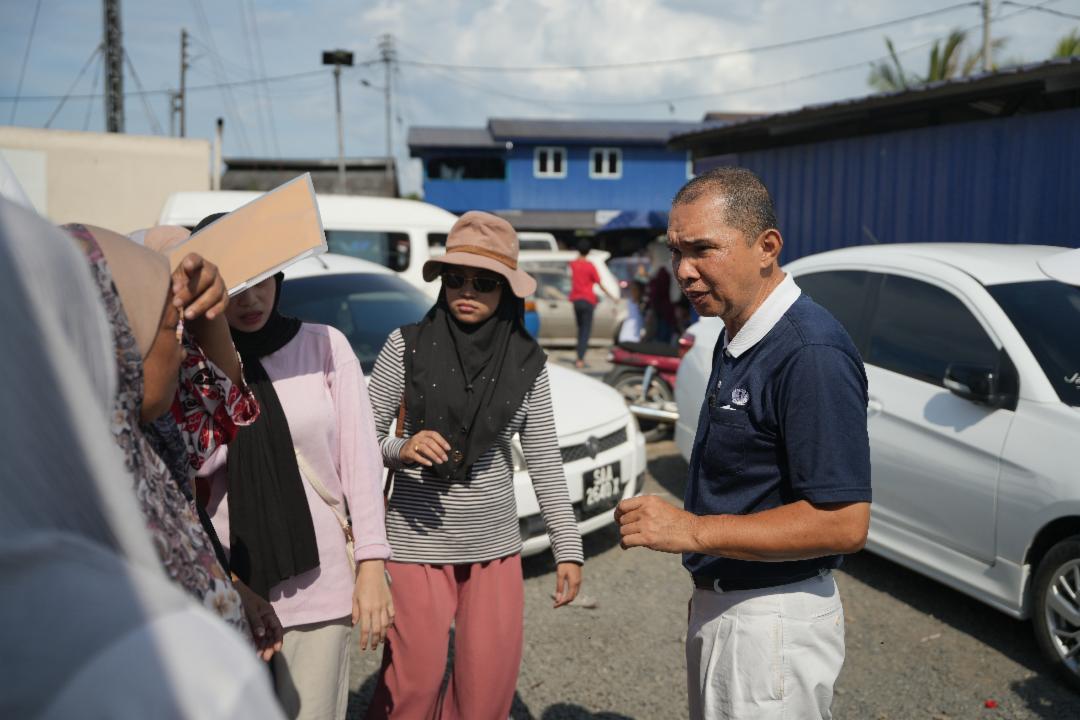






![After a challenging identity verification process, Tzu Chi presented to each eligible household relief funds, a letter of consolation from Master Cheng Yen and a blanket. [Photo by Boon Wui Kong]](/images/Articles/CS/2026/KL20260516_wwg01_109.jpg "After a challenging identity verification process, Tzu Chi presented to each eligible household relief funds, a letter of consolation from Master Cheng Yen and a blanket. [Photo by Boon Wui Kong]")
Two major fires in Kampung Bahagia and Kampung Karamunting in Sandakan, Sabah, left more than a thousand people without homes. As many of those affected were stateless individuals, post-disaster registration and identity verification were especially challenging. As families waited for the chance to rebuild, Tzu Chi volunteers walked alongside them with material aid, emotional support and heartfelt companionship.
On 19 and 29 April 2026, fires broke out in Kampung Bahagia and Kampung Karamunting in Sandakan, Sabah, destroying homes and livelihoods across the two coastal settlements.
After the disaster, affected residents were temporarily housed in a car park near the seaside. Mercy Malaysia, an international non-profit organisation, provided tents for those who were unable to stay in temporary evacuation centres.
With the tents pitched directly on the asphalt road, the air inside was stifling in the heat of the day. When thunderstorms came, strong winds and rain left families anxious and unsettled.
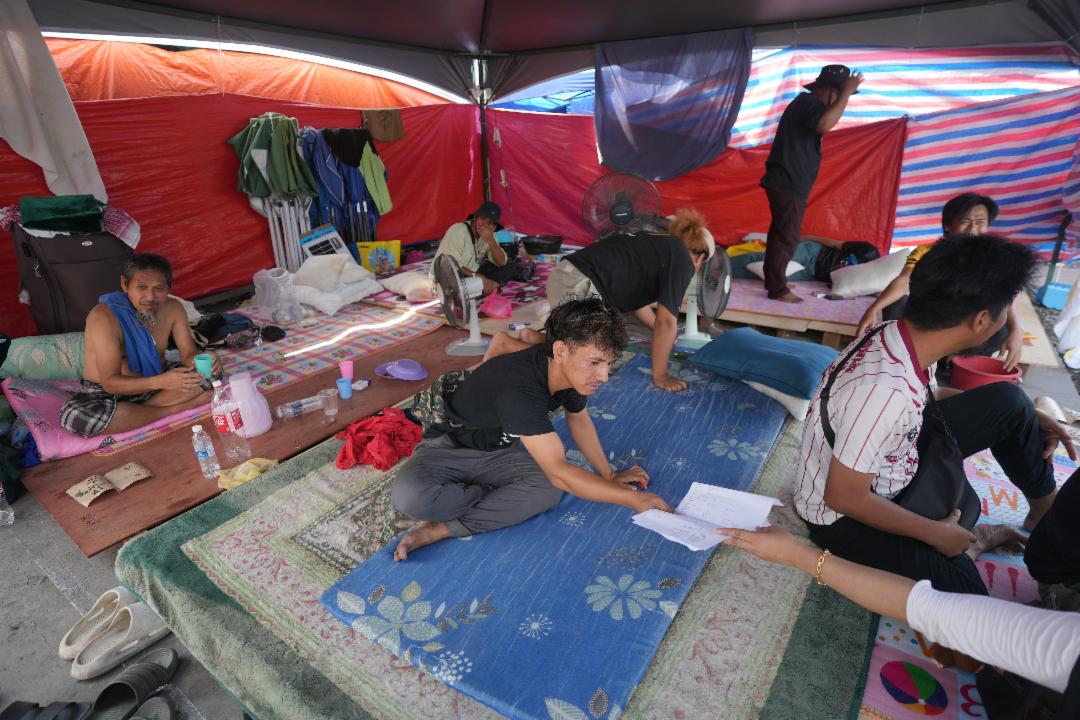
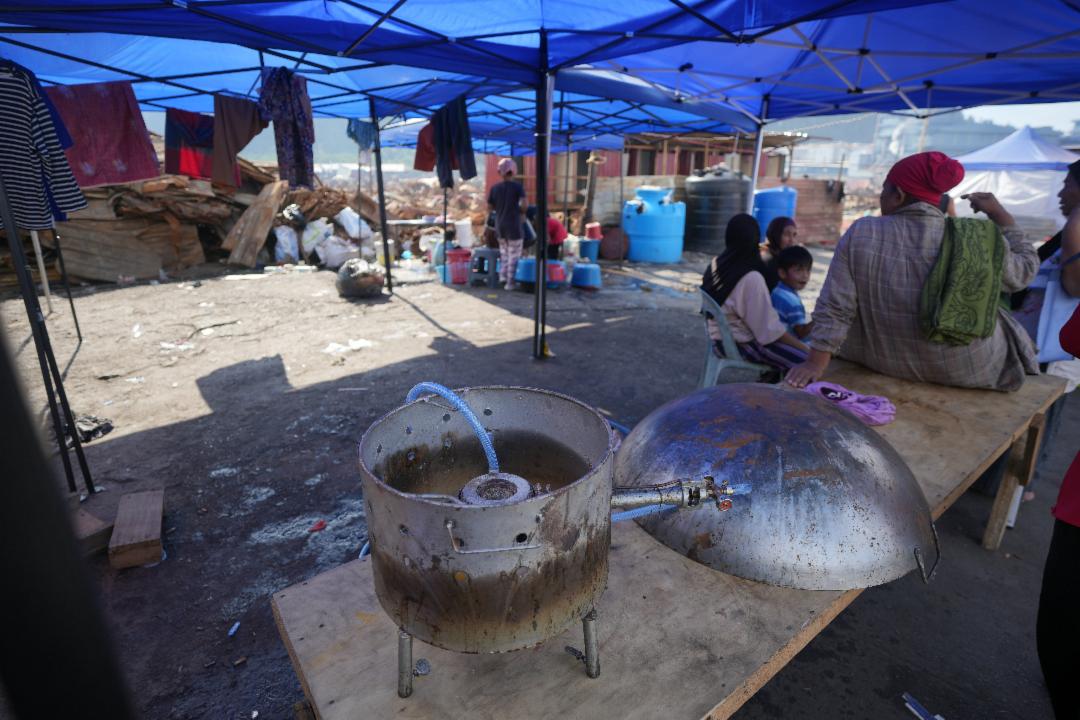
Amid such difficult conditions, some residents sat quietly, staring into the distance, while some began looking for ways to make ends meet. With whatever little they had, a few set up small stalls beside the tents, selling drinks, snacks and daily necessities to supplement their household income.
The entire temporary settlement now relies on one pipe channelled from the hill for daily water, while ten provisional toilets serve the site. As the weather is unbearably hot during the day, most residents wait until evening to bathe, creating long queues that can stretch late into the night.
◎ Livelihoods lost to the flames
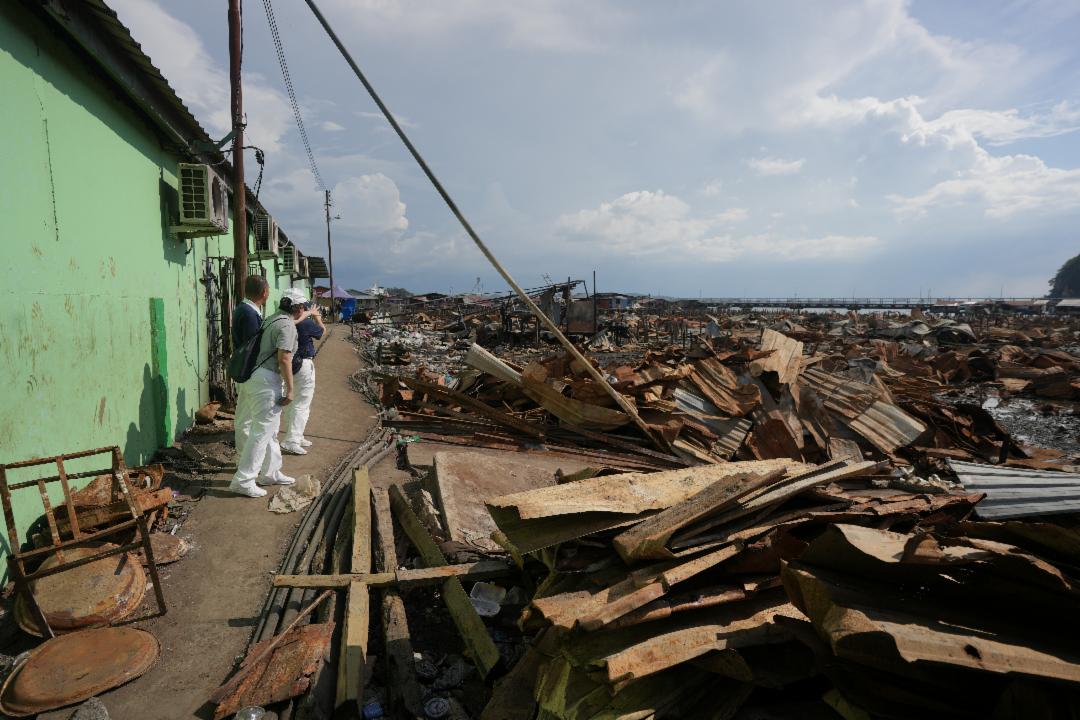
The fire broke out in the early hours, while most residents were asleep. Many were jolted awake only when neighbours knocked repeatedly on doors and shouted for them to flee. Some tried to fight the flames with buckets of water, but the blaze spread too quickly to control. With wooden houses built close together, one home could be engulfed within few minutes.
When firefighters arrived, low water pressure and the receding tide further hampered rescue efforts. They eventually drew water from a nearby factory to stop the fire from spreading towards a nearby oil refinery — a frightening possibility for everyone at the scene. The blaze was finally contained and extinguished around 11 a.m.
After burning for about ten hours, the fire was estimated to have affected between 700 and 1,000 households. Fortunately, all residents managed to escape, and no lives were lost.
For the families, however, the flames destroyed much more than their homes. Most villagers made a living from fishing, and many kept their boats, engines and fishing nets in front of their houses. When the fire spread, these essential tools of livelihood were also reduced to ashes. Many families now face not only the task of rebuilding their homes, but also the high cost of replacing boats, engines and nets.
“The greatest issue now is that we’ve all lost our source of income,” one resident said.
After the fire, many residents were occupied with recovery efforts, waiting to enter evacuation centres and settling their families. Some had taken leave for too long, only to return to work and discover that they had been dismissed.
When Tzu Chi volunteers asked several affected residents about their plans, the answer was almost always the same: “Wait.” They were waiting for the relevant authorities to approve their return to the original site so they could rebuild their homes.
◎ The challenge of non-documentation
Kiing Teck Ngie, who heads the Tzu Chi Sandakan Liaison Office, said he was deeply moved by the love and care shown by various sectors of society.
“At first, supplies were genuinely scarce. But by the second and third day, more resources began coming in, and water and food gradually became more sufficient,” he said.
Yet when volunteers entered the disaster area, they realised that the residents needed more than immediate material aid. They also needed empathy and care.
Many had fled with no time to pack anything, not even basic clothing. Some told volunteers that, compared with cooked meals that could spoil quickly, the bread provided by Tzu Chi was more practical. “The bread is very good. It can keep for two or three days, and we can eat it when we’re hungry,” they said.
Another major challenge was documentation. Many affected residents had no legal identity documents. Teck Ngie said volunteers went into the disaster site every day to help organise name lists and verify information, but some residents had no documents at all, while others had used different versions of their names over the years.
“Some people really have no documents whatsoever, so tracking and confirming their identities is extremely difficult,” he said. Volunteers could only accompany them patiently while seeking help from village heads and local community members who knew the residents well.
Speaking of what touched him most, Teck Ngie said gently, “I discovered that everyone has love in their hearts and is willing to contribute in whatever way possible.”
Even some residents who had themselves been affected by the fire took the initiative to cook for others. Some donated rice; others brought vegetables and ingredients. Together, the villagers prepared hot meals to share.
“Everyone is protecting this disaster area together, helping and supporting one another,” he said. In the aftermath of the disaster, bonds between people grew even stronger.
When Tzu Chi volunteers later returned to the village for the aid distribution, many residents smiled with relief at the sight of the familiar blue-and-white uniforms. “You are here,” they said warmly.
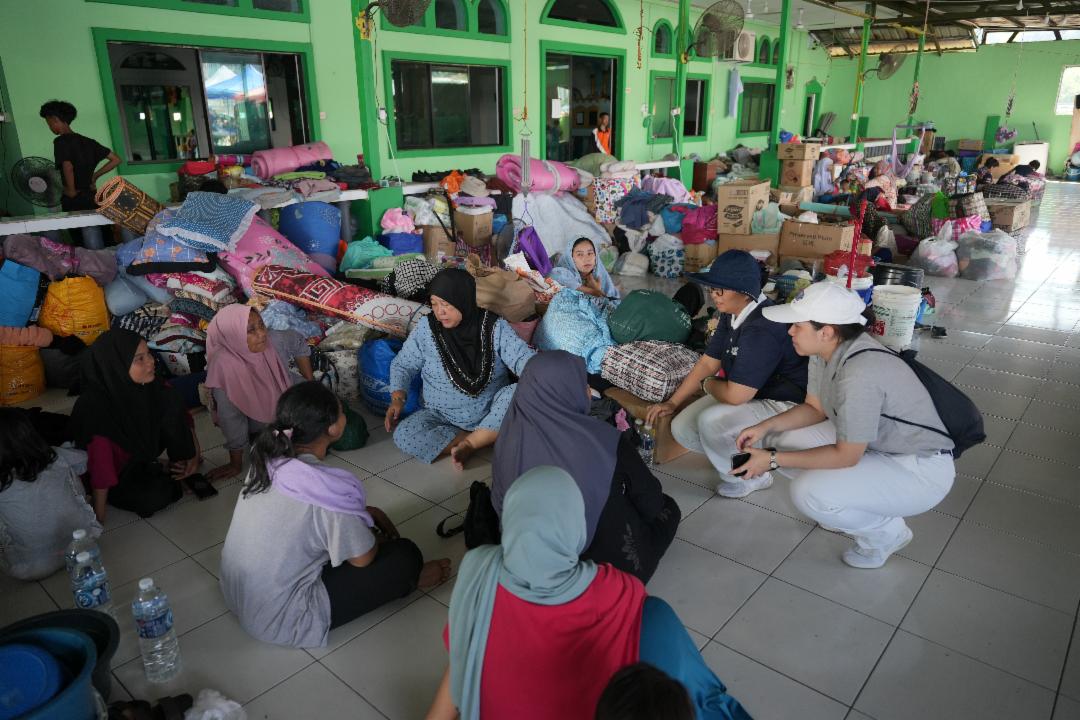
On the night before the distribution on 16 May 2026, volunteers worked at the hall of Chi Hwa Primary School, arranging chairs, planning movement routes and rehearsing procedures. They hoped the next day’s distribution would proceed smoothly, so affected residents could receive the relief funds with peace of mind.
At 6 a.m. on 16 May, affected residents began arriving by public transport from their temporary shelters. While volunteers were still making their final preparations, the residents had already formed two orderly lines — one for men and one for women — and waited patiently. Seeing that they had travelled early in the morning, volunteers opened the venue ahead of schedule and carefully verified each person’s details, determined to ensure that aid reached those who truly needed it.
Inside the hall, everyone watched a Tzu Chi disaster relief video. As scenes of the fire appeared on screen, many could not hold back their tears. Later, led by a religious leader, the gathering prayed fervently. Affected residents and volunteers also shared stories of post-disaster companionship and the spirit of Tzu Chi’s bamboo bank era.
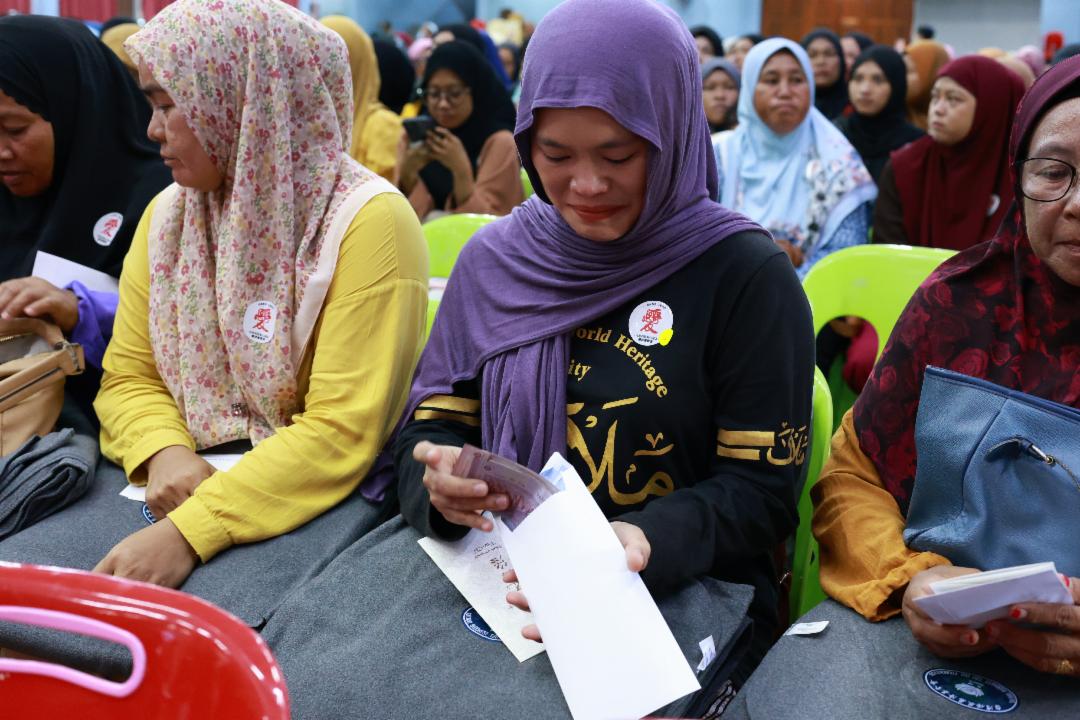
In total, 649 households from Kampung Bahagia and 30 households from Kampung Karamunting received relief funds, a letter of consolation from Master Cheng Yen and blankets. The event concluded with everyone performing the sign language rendition of the song, “One Family”, exchanging blessings in a moving atmosphere. Most touching of all, many beneficiaries voluntarily placed coins into the bamboo bank, giving back with gratitude for the love they had received.
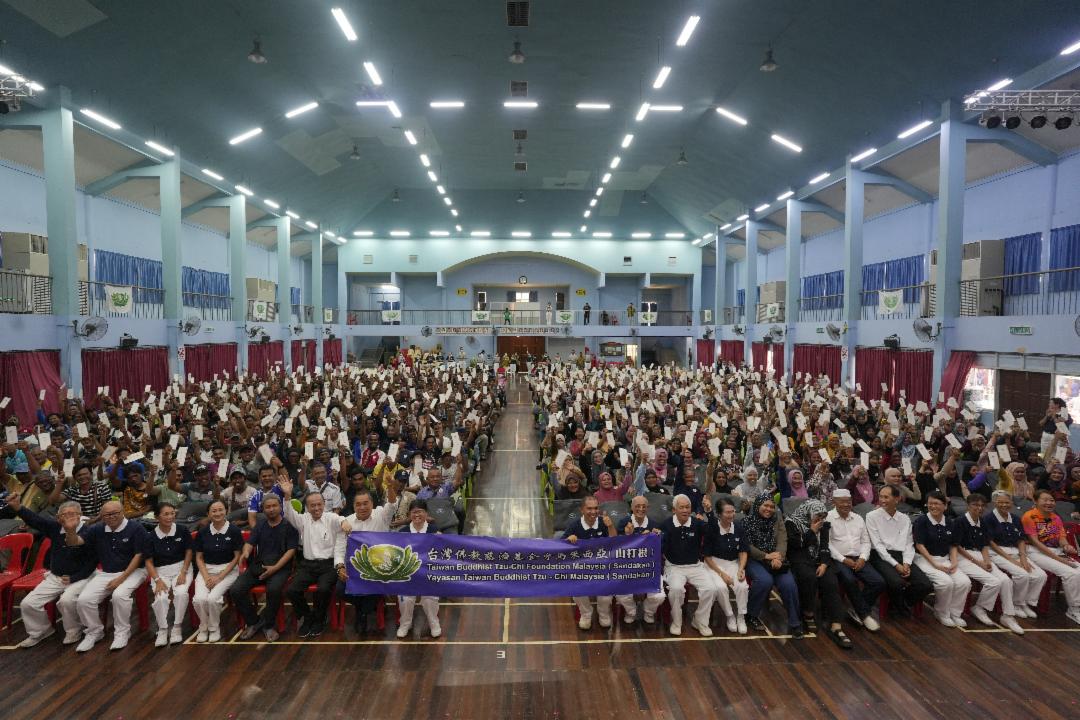
◎ Becoming someone who helps others
Affected resident Alnalin Insani still felt shaken when she recalled the night of the fire.
She was asleep when the fire broke out and only realised the danger when loud knocking and urgent shouts from neighbours woke her. With three elderly relatives in the house, including an 80-year-old with limited mobility, the evacuation was especially difficult.
In the panic, she tried to gather some belongings, but her son stopped her. “Mum, don’t take anything else. Staying alive is what matters most now.”
In the end, she escaped with just one bag, only to realise at the evacuation centre that it contained nothing but new clothes for Hari Raya. Recalling the moment, she gave a wry smile. Thankfully, charitable organisations and volunteers later brought clothing and daily necessities, for which she was deeply grateful.
Alnalin said she would first save the Tzu Chi relief funds and gradually plan for future living expenses and rental costs. Looking ahead, she shared that she had long hoped to volunteer with Tzu Chi. “If I have the opportunity, I’d like to help others too,” she said.

Another affected resident, Adzmin bin Muddasir, encountered Tzu Chi for the first time. After receiving the relief funds, he read Master Cheng Yen’s letter of consolation again and again. He explained he read it so carefully because he could feel the volunteers’ sincerity and wholehearted care.
“What they gave was not just a little — it was truly a lot,” he said.
He added that previous aid distributions had often been chaotic, with people scrambling and jostling for supplies. This time, however, everyone queued and received aid in an orderly manner. “This made me feel that the volunteers had really put their hearts into it,” he said. When volunteers asked whether he would be willing to help others in future, he nodded unhesitatingly.
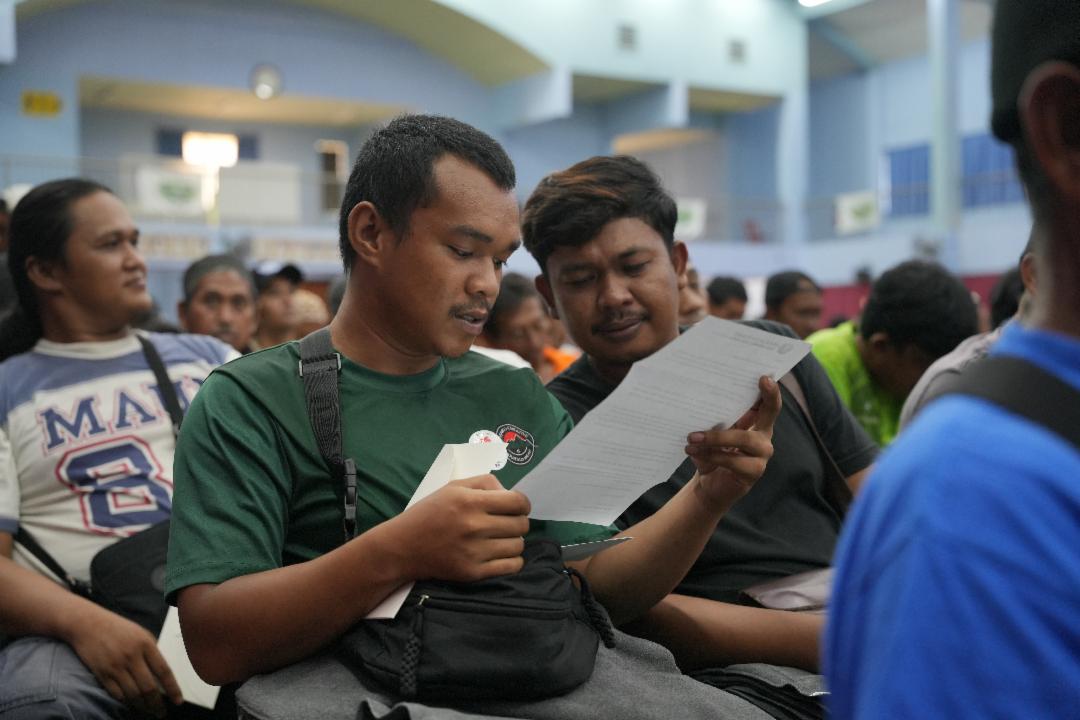
Haymah Pandy, another affected resident, said that although she was not a local citizen, she still received much assistance and care after the fire. To her, the support was not only material aid, but also a source of warmth and humanity.
When a video of the disaster area was shown during the event, she was overcome with emotion. The scenes on screen showed the home where she and her children had lived for many years. “There are so many memories of our family there,” she said.
Although her home no longer exists, she remains grateful that her family is safe. Speaking of the future, she said she would continue working hard, start afresh, and hoped to have the chance to become a volunteer one day, helping more people in need.
●
Mohd Anuar bin Noah, Chairman of the Village Development and Security Committee, said registration work after the fire had been extremely challenging. As residents’ information had not been systematically consolidated over the years, the team had to recheck the name lists in stages to confirm which households had genuinely been affected. The lack of a fixed registration area on site made the work even more difficult.
Despite long hours, exhaustion and pressure, many volunteers and residents continued to devote themselves to the relief effort. “Sometimes we only went back in the early hours of the morning, and by 5-ish a.m., we were already back on site,” he said.
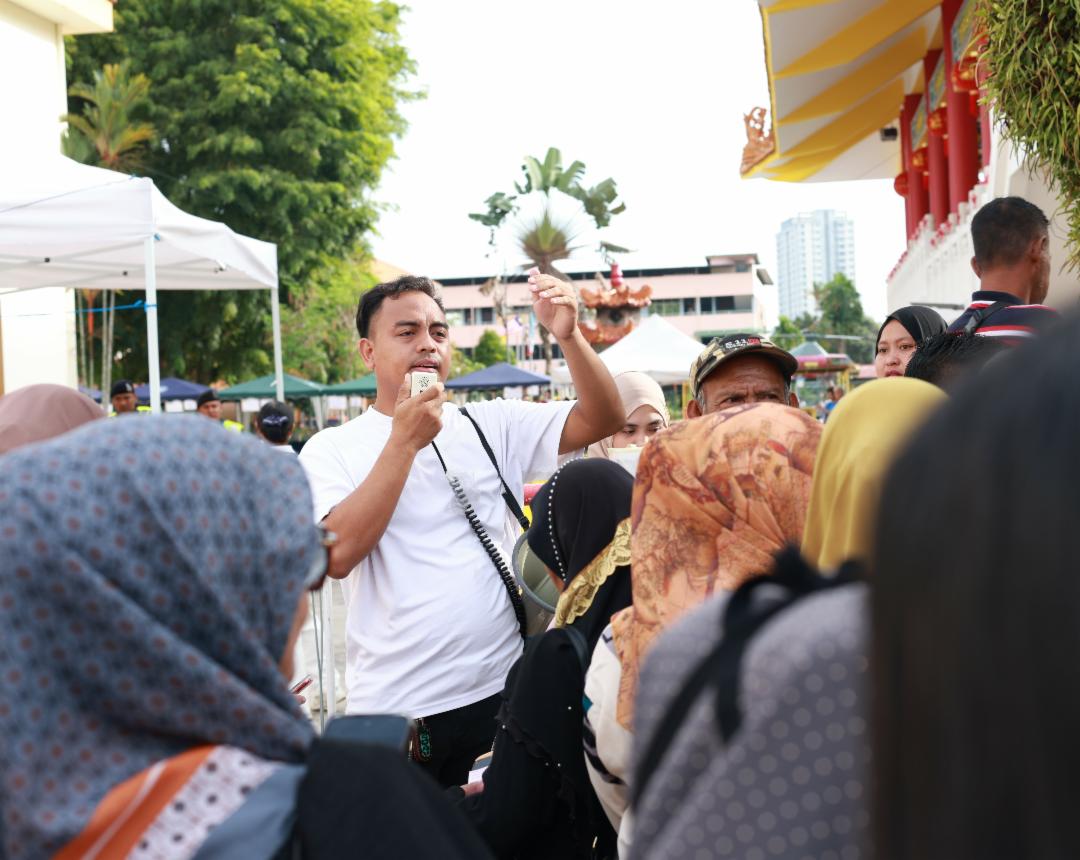
Having worked among impoverished communities for many years, Teck Ngie firmly believes that kindness and love exist in every person. After this fire, he hopes even more strongly to sow seeds of love in the community and encourage more residents to protect their neighbourhood together. “As long as each person is willing to contribute even a little, we can all care for this place better.”
For Teck Ngie, disaster relief is never merely short-term assistance. It is a long journey of companionship.
The fire destroyed homes, but it did not extinguish people’s kindness. Amid the warmth of mutual support, new hope is slowly beginning to take root.