






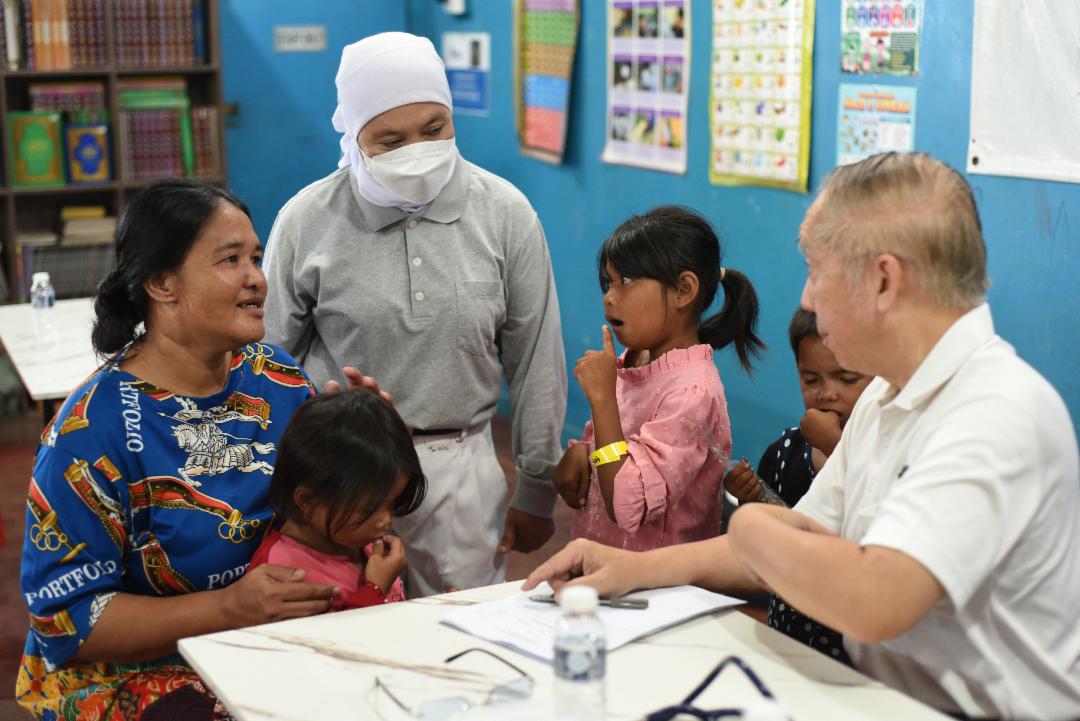
![Upholding the mission to safeguard life with love, the Tzu Chi team provided free medical care for residents of Kampung Panji in Lahad Datu, Sabah. [Photo by Chai Mong Ping]](/images/Articles/YL/2026/KL20260614_cmp02_180.jpg "Upholding the mission to safeguard life with love, the Tzu Chi team provided free medical care for residents of Kampung Panji in Lahad Datu, Sabah. [Photo by Chai Mong Ping]")
For families living without legal identity documents, falling ill can mean more than pain. It can mean delaying treatment, borrowing beyond their means, or simply enduring illness because medical care is too costly to access.
Without proper documentation, many residents of the coastal stilt village of Kampung Panji in Lahad Datu lack access to public services. Even basic healthcare can feel out of reach.
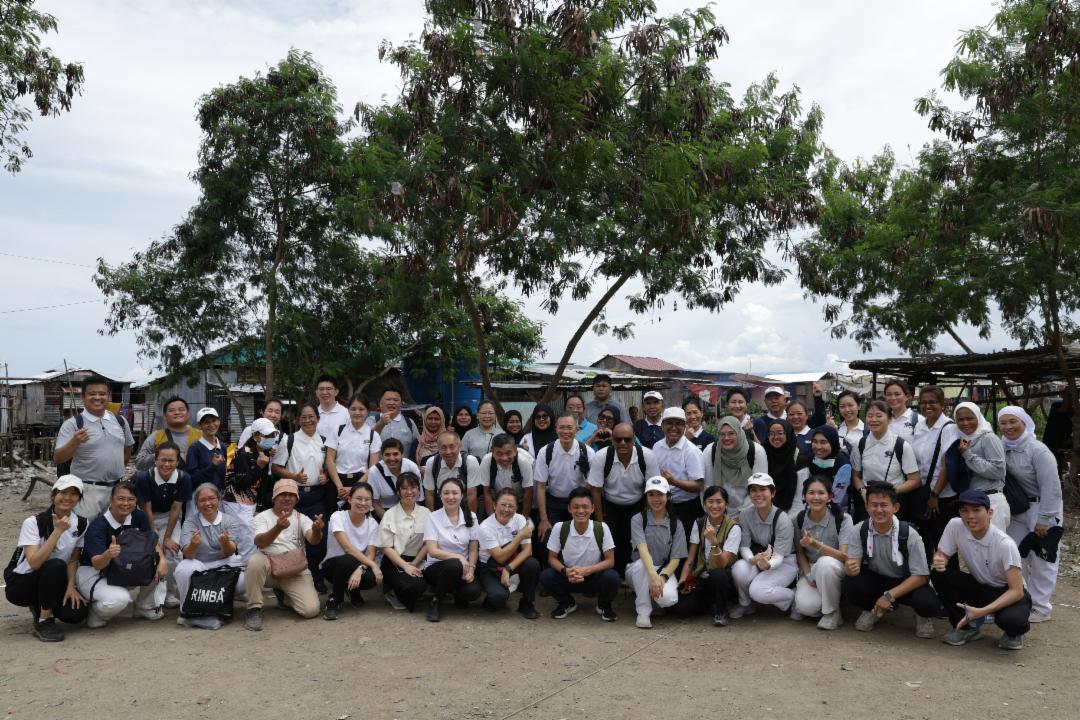
Following a medical outreach in September last year, members of the Tzu Chi International Medical Association (TIMA) KL & Selangor returned to Lahad Datu alongside Tzu Chi volunteers from Sabah. Over two days, from 13 to 14 June 2026, a team of 133 medical professionals and volunteers conducted three free clinic sessions at Lahad Datu Middle School and Kampung Panji, serving approximately 1,000 patient visits.
◎ Building a clinic from the ground up
At 7:30 a.m. on Sunday, the team arrived at Kampung Panji. As the village is inaccessible by car, they walked for about ten minutes across open ground and along paths made from discarded tyres, carrying medical equipment, medicines, canopies, tables and chairs by hand. Seeing the volunteers, local children ran forward to help.
The short journey offered a glimpse into the daily lives of the villagers. Most homes are wooden stilt houses built over a rubbish-strewn swamp, connected by narrow, rickety wooden planks. One careless step could send a person slipping into the marsh below.
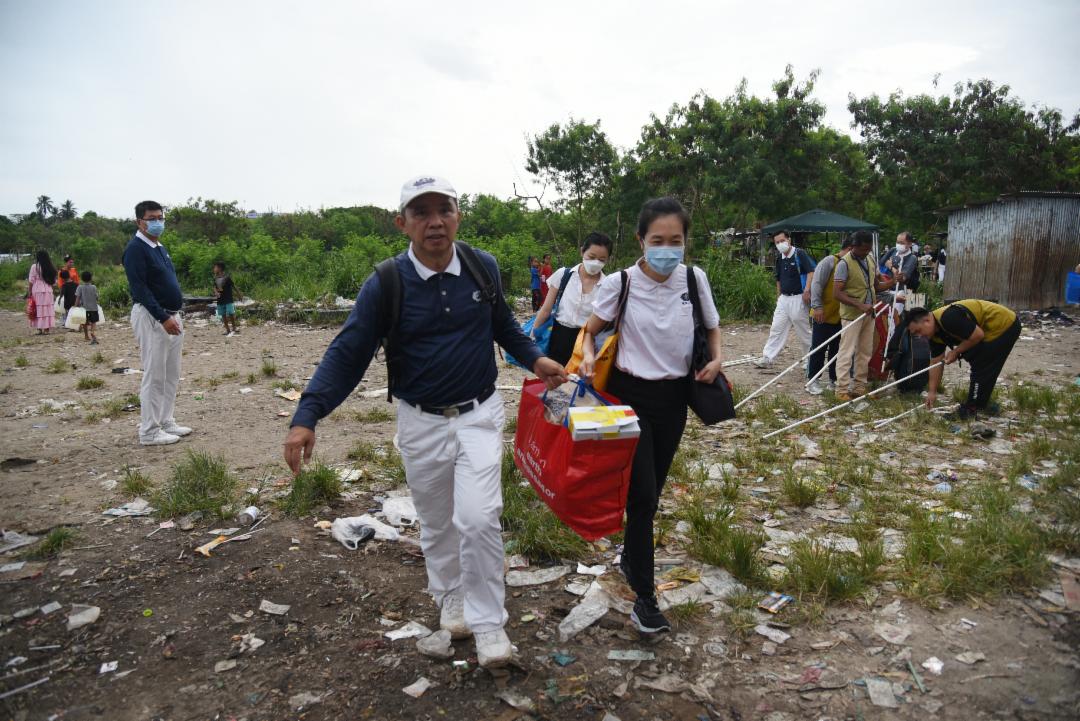
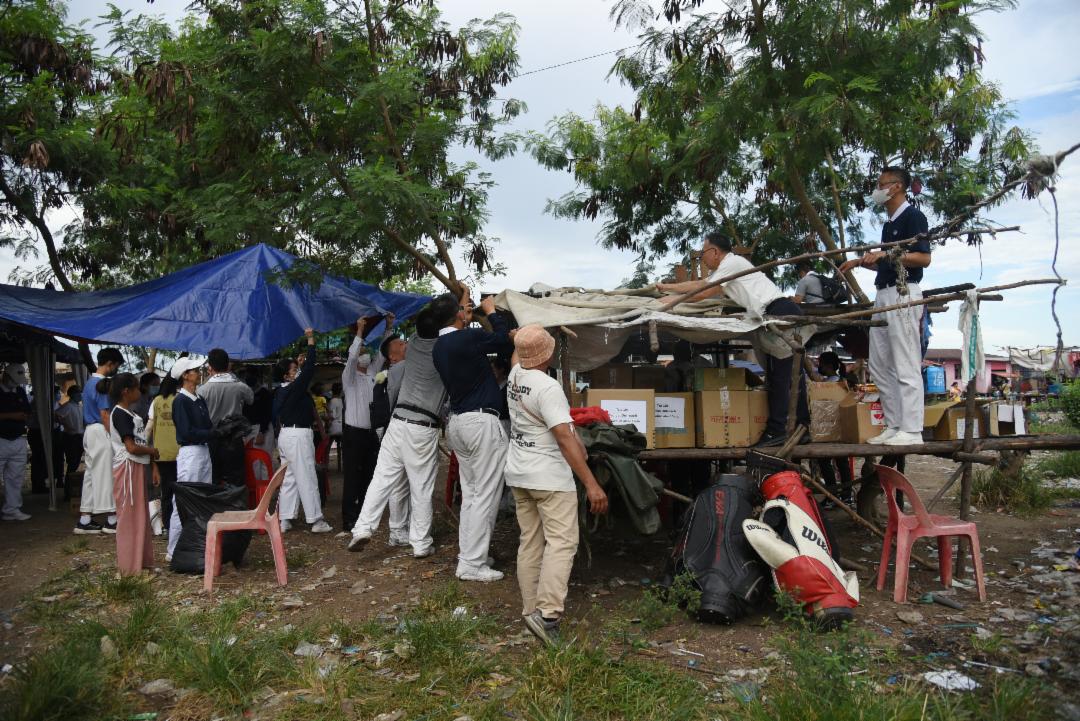
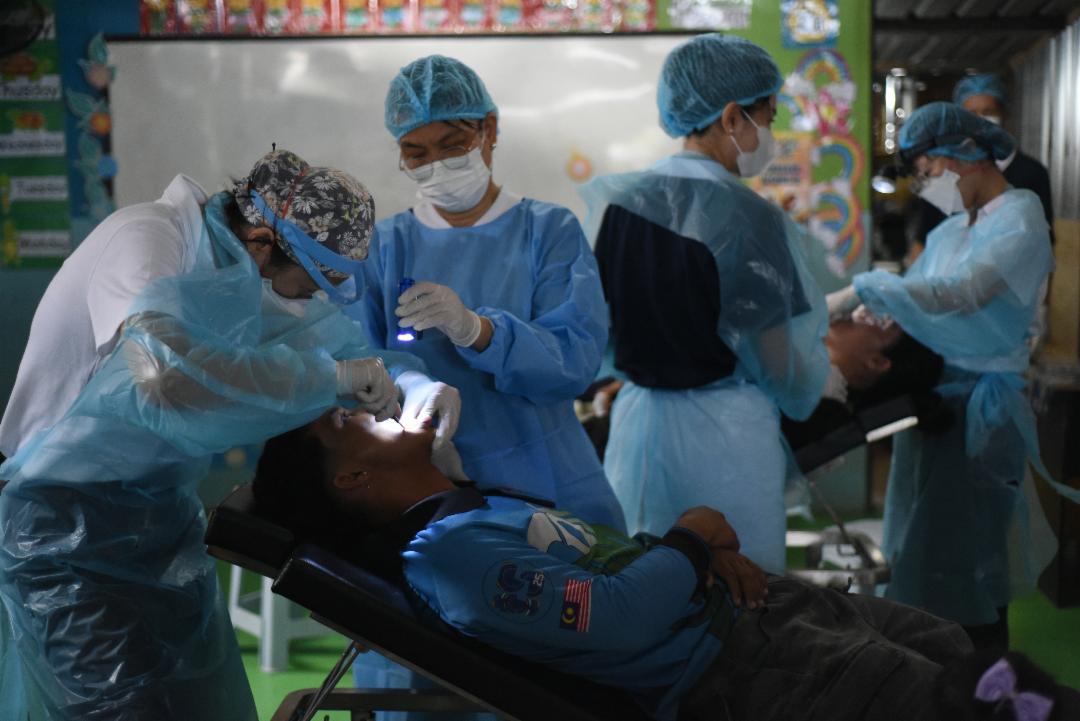
With many hands working together, an open patch of dirt usually used for games and leisure activities was soon transformed into the registration, waiting and pharmacy area. The general consultation area was set up inside the village prayer room, while a small religious classroom next door was converted into a temporary dental area.
As the village lacks clean running water, dental services had to be limited to check-ups, extractions and other basic treatments.
◎ Sowing the seeds of hope through education
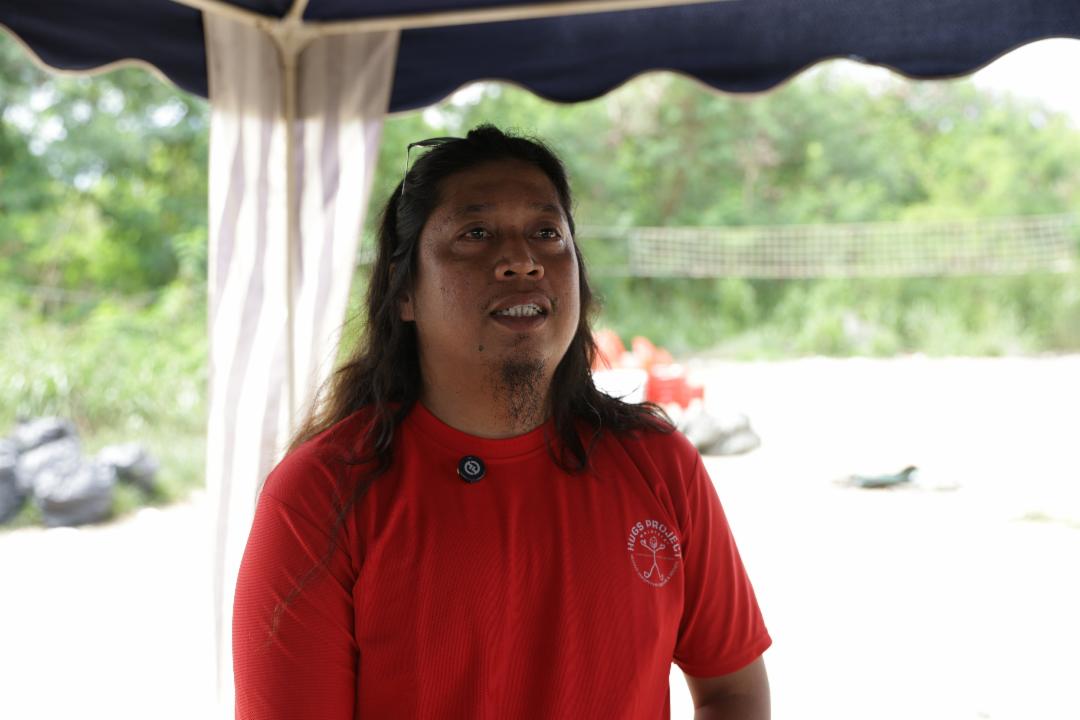
Beyond healthcare, stateless children in Kampung Panji also face barriers to education. Since 2023, Ibnu Suhud bin Abd Razi, who manages the local Rumah Kaji, a Qur’an reading class, has been providing free lessons to children in the village.
“We don’t ask for ID,” Ibnu said. “If a child wants to learn, they’re welcome here.”
Over the past three years, he has witnessed a gradual transformation in the children. Some once begged on the streets to survive. With basic literacy and numeracy skills, a number of them have since found work in markets or as cleaners, taking small but meaningful steps towards self-reliance.
Having heard about Tzu Chi’s humanitarian work, Ibnu gladly offered the prayer room at the Qur’an class for the free clinic. “The villagers simply can’t afford high medical costs,” he said. “When we heard Tzu Chi was coming to provide free treatment, we were more than happy to make the space available.”
He shared that many residents had been waiting for the team to return since the previous outreach. “People started arriving early in the morning. Even elderly villagers leaning on walking sticks waited patiently for their turn.”
For Ibnu, the clinic was more than a medical service; it also brought care and joy. In the past, some villagers would hide from doctors because they feared injections and were wary of outsiders. But through the medical team’s patient explanations and companionship, they gradually built trust in healthcare and came to understand the importance of managing their health.
Upon learning that the entire team had travelled at their own expense, with some even taking annual leave to serve, Ibnu was visibly moved. “I’m grateful to the doctors and volunteers for setting aside their own work and giving their time and effort to help our people,” he said.
◎ A mother’s burden, eased by reassurance
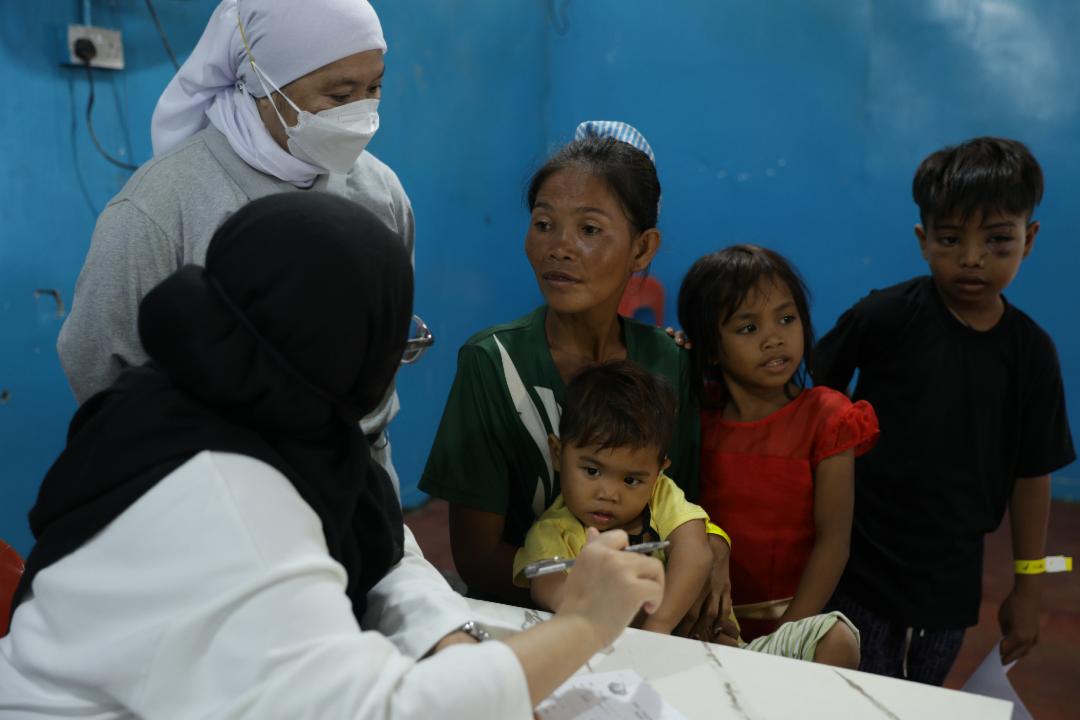
For 25-year-old Amina binti Victor, the free clinic was a source of much-needed reassurance. After losing both parents and being abandoned by her husband, she is raising five children on her own, including two children of a late relative.
Without identity documents, Amina is unable to secure stable work and can only depend on the kindness of others to keep her family fed.
Two months earlier, one of her children injured his leg from a fall. Since then, he had been unable to walk normally. Unable to afford a hospital visit, Amina could only rely on traditional massage to ease his pain.
At the clinic, a doctor carefully examined the boy. His leg appeared to be healing and was expected to recover gradually. However, the doctor still wrote a referral letter to Lahad Datu Hospital for an X-ray to rule out any fracture and give Amina peace of mind.
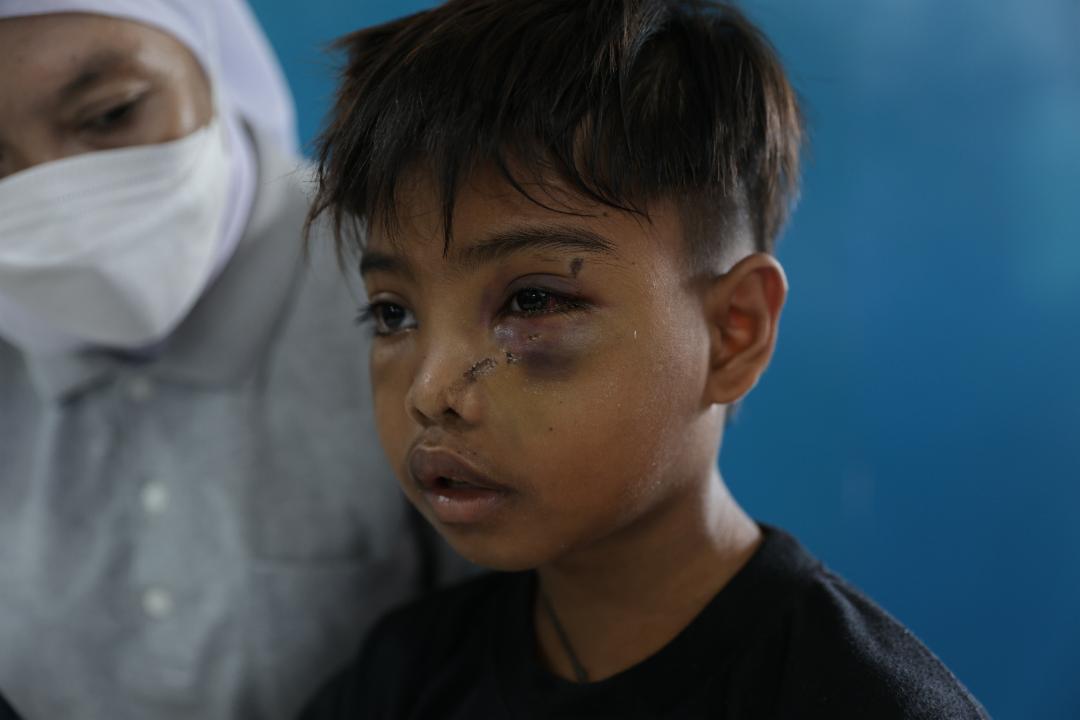
Amina herself received a prescription for dizziness, while another child in her care was checked for an eye injury sustained after falling from a wooden bridge and hitting the edge of a boat. The doctor found no obvious internal injury and confirmed that the child’s vision was unaffected. Eye drops and artificial tears were prescribed, along with advice to continue monitoring the condition.
Knowing that the children were all right, Amina’s worries eased. “Thank you so much for coming here to check on us and care for our health,” she said.
◎ Returning with gratitude
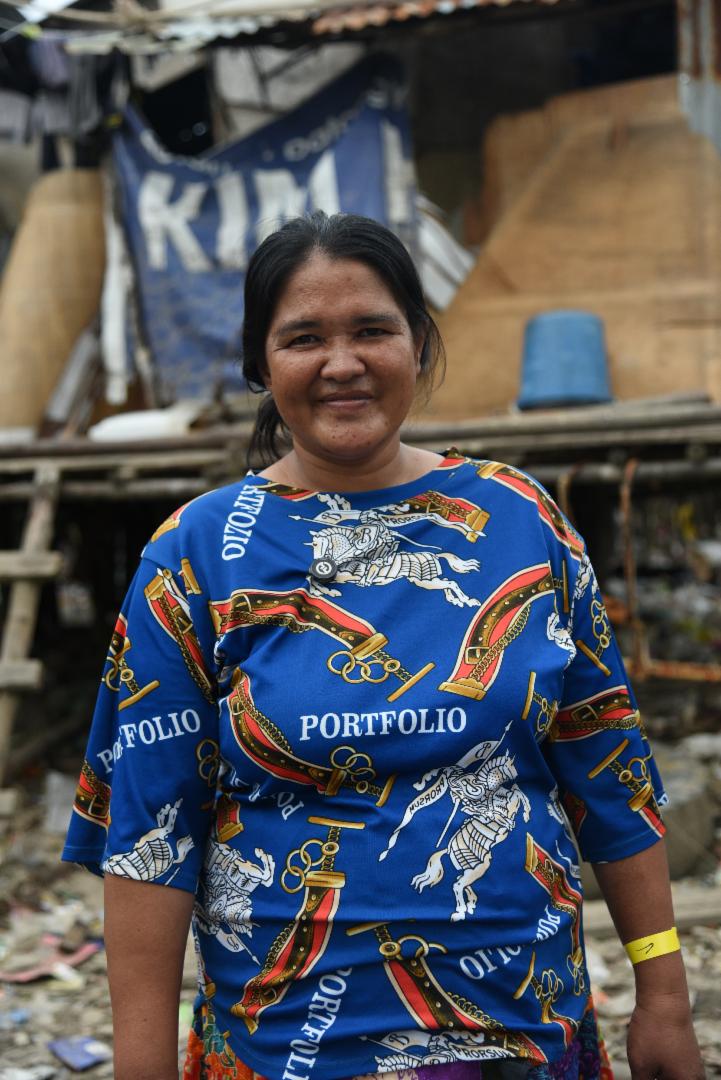
For 45-year-old Aning, the sight of Tzu Chi volunteers brought tears to her eyes.
Volunteers first met her in July 2024 during a relief distribution. By then, she had already been suffering from pain for three years, with a swelling on the right side of her face. She was too afraid of the medical costs to seek hospital treatment and instead used traditional herbs, but the tumour continued to grow.
After enduring the pain for so long, Tzu Chi volunteers stepped in.
On 20 November 2024, with Tzu Chi’s referral and accompaniment, Aning was admitted to Lahad Datu Hospital for tumour removal surgery. Post-operative tests later confirmed that the tumour was benign.
“I was so frightened back then,” Aning recalled, her voice choked with emotion. “I kept thinking, if I die, what will happen to my children?”
Today, Aning has recovered, and her face lights up with a bright smile, although life remains a daily struggle. She came to the free clinic with her children not only to collect medication for her itchy skin, but also to express her gratitude to the volunteers.
When she met volunteers who recognised her, they greeted her warmly and showed genuine concern, making her feel cared for once again.
●
A two-day free clinic could not solve every hardship, but it brought temporary relief, reassurance, and hope to a community often left beyond the reach of regular care.
In every consultation, every kind word spoken, and every caring gesture, the clinic conveyed a profound message: every life matters.

